Pharmaceutical Warehouse Monitoring: USP 1079 and GDP Compliance Guide 2026
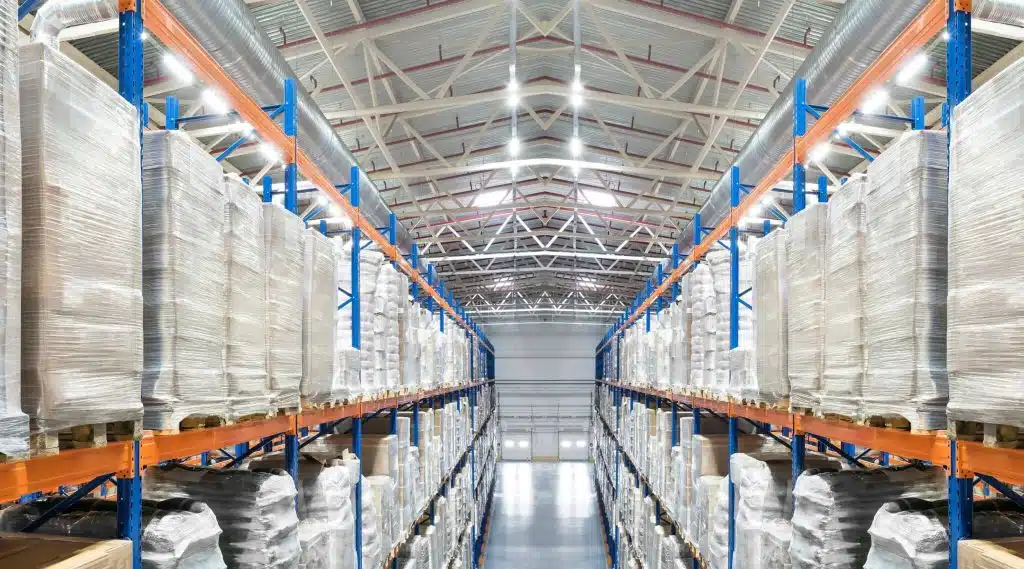
The biopharma industry loses approximately $35 billion annually to temperature failures across the supply chain, according to IQVIA Institute data. A single pharmaceutical recall costs between $10 million and $100 million depending on scope and severity. Those numbers are not abstract, they trace directly back to warehouses where temperature and humidity monitoring failed, where manual logs missed a two-hour excursion on a Friday night, or where seasonal hot spots in racking went unmapped until an FDA inspector pointed at them. Pharmaceutical warehouse monitoring is the layer of protection that sits between your stored inventory and those losses.
Your facility is subject to a stack of overlapping requirements that most warehouse operators underestimate. USP General Chapter 1079 sets the standard for storage and distribution of finished drug products, including specific provisions for warehouse temperature mapping, mean kinetic temperature calculation, and excursion documentation. FDA’s 21 CFR 211.142 requires written warehousing procedures with documented environmental controls. WHO Good Distribution Practice mandates calibrated monitoring devices traceable to ISO 17025, with complete deviation records ready for inspection. Every layer expects the same thing from you: continuous, documented proof that your products stayed within range, not a paper log filled in once a shift.
This guide covers what each of those regulations actually requires in your warehouse, where facilities most commonly get it wrong, and how continuous pharmaceutical warehouse monitoring through a Monitoring as a Service platform eliminates the gaps that manual systems cannot close. If you store finished pharmaceuticals, active ingredients, biologics, or temperature-sensitive specialty drugs, every section applies to your operation.
The cost of inadequate pharmaceutical warehouse monitoring, by the numbers
What USP General Chapter 1079 Actually Requires in Your Warehouse
USP General Chapter 1079, formally titled “Risks and Mitigation Strategies for the Storage and Transportation of Finished Drug Products” since its February 2021 revision, is the foundational standard for pharmaceutical warehouse monitoring in the United States. It applies to any organization involved in storing or distributing finished drug products: manufacturers, wholesale distributors, 3PL providers, and specialty pharmacies holding finished goods. If temperature-labeled product sits in your facility, 1079 governs how you protect it.
The chapter takes a risk-based approach. Rather than prescribing a single monitoring method, it requires facilities to identify risks in storage and transportation, document mitigation strategies, and demonstrate that those strategies work through ongoing data collection. The temperature monitoring requirements span the entire supply chain, from the original manufacturer through every warehouse, distribution center, and last-mile handler that touches the product before it reaches a dispensing pharmacy or healthcare provider.
For warehouse operators specifically, USP 1079 establishes several non-negotiable obligations. Your facility must implement a Quality Management System that documents storage procedures, excursion handling protocols, and corrective and preventive actions. You must qualify your storage equipment and areas before use through formal temperature mapping. You must maintain calibrated monitoring systems with active alarms. And you must keep records of all of this in a format that can be reviewed during regulatory inspections or quality audits by your pharmaceutical clients.
USP 1079 Core Requirements for Pharmaceutical Warehouse Monitoring
- Temperature mapping of all storage areas before use, conducted at seasonal extremes (summer and winter), per USP 1079
- Mean Kinetic Temperature (MKT) calculated for each separate storage zone within the warehouse
- Continuous monitoring with calibrated devices; calibration traceable to NIST or international standards per USP 1118
- Documented excursion handling: investigation, risk assessment, and corrective action records
- Quality Management System covering standard operating procedures, deviation management, and training records
- Sub-chapter 1079.2 addresses MKT application for both controlled room temperature and refrigerated products
The 2021 revision of USP 1079 also expanded the scope of who is responsible. It specifically defines the monitoring and documentation obligations of manufacturers, wholesalers, distributors, logistics providers, and brokers, all parties in the chain now carry explicit accountability, not just the original manufacturer. If your 3PL stores pharmaceutical products and something goes wrong with storage conditions, the standard holds you responsible for your portion of the chain.
The accompanying sub-chapter USP 1079.3, currently in development to replace USP 1118, will formalize requirements for pharmaceutical warehouse monitoring technology: sensor types, performance characteristics, qualification procedures, and placement guidance. The direction is clear, regulators are moving toward greater specificity, not less, in how they expect monitoring systems to be selected and validated. Setting up robust Monitoring as a Service infrastructure now positions your facility ahead of that curve.
Temperature Zone Definitions: Where Warehouses Get the Ranges Wrong
The storage temperature definitions that govern pharmaceutical warehouse monitoring come from USP General Chapter 659 (Packaging and Storage Requirements), which now holds the zone definitions that were formerly housed in USP 1079 itself. These definitions are not suggestions, they are the legal standards against which every lot of stored product is evaluated. Getting them wrong is how facilities end up with compromised batches and FDA Form 483 observations.
Controlled Room Temperature (CRT) is the most common storage condition in general pharmaceutical warehouses. USP 659 defines CRT as 20-25 degrees Celsius, with excursions permitted between 15 and 30 degrees, provided the Mean Kinetic Temperature does not exceed 25 degrees. Brief exposures up to 40 degrees may be tolerated if the MKT stays within limit, but such exposures should be minimized. This is the range your warehouse management system labels “ambient”, and it is stricter than many operators assume. A warehouse that hits 32 degrees in a summer loading dock zone is producing a temperature excursion for any CRT-labeled product stored near that area, even if the excursion is brief and the rest of the facility is within range.
Refrigerated storage requires 2-8 degrees Celsius. This is the zone for biologics, certain vaccines, insulin formulations, and a growing share of specialty drugs. The research published in PMC’s temperature excursion management study found that pharmaceutical refrigerators with glass doors can reach 8 degrees Celsius internally in under one hour after power loss, which means a refrigeration failure detected at the next manual check, hours later, has almost certainly already pushed product out of range. Frozen products, used for advanced cell and gene therapies and some vaccines, require -20 degrees Celsius or lower, with certain biologics demanding -70 degrees or below.
USP Storage Zone Reference for Pharmaceutical Warehouse Monitoring
- Controlled Room Temperature (CRT): 20-25°C target; excursions 15-30°C permitted; MKT must not exceed 25°C
- Cool: 8-15°C (USP 659 definition; not the same as refrigerated)
- Refrigerated: 2-8°C; failure within one hour of power loss in glass-door units (PMC data)
- Frozen: -20°C or below; cell and gene therapies may require -70°C or below
- Ambient (WHO guidance): 15-25°C for general pharmaceutical storage in controlled warehouse environments
The practical challenge for pharmaceutical warehouse monitoring in large storage facilities is that no single facility maintains perfectly uniform conditions across its entire footprint. High-bay racking creates vertical temperature stratification, product stored at the top of a rack can be 3-5 degrees warmer than product at floor level, particularly in summer months when roof heat absorption is highest. Areas near loading docks experience frequent temperature swings as doors open and close. North-facing exterior walls and south-facing walls behave differently. Lights generate localized heat at high-racking levels. These are not hypothetical risks, they are the specific vulnerable areas that ISPE and WHO temperature mapping protocols are designed to identify before product is placed in storage.
Your warehouse pharmaceutical monitoring strategy needs to account for each of these zones independently. A single sensor in the center of the facility tells you almost nothing about conditions at the dock doors or the top shelf of aisle 14. Proper sensor placement, mapped from the thermal study, positioned at identified hot and cold spots, is what transforms pharmaceutical warehouse monitoring from a compliance checkbox into an actual early warning system.
Mean Kinetic Temperature: The Calculation That Determines Batch Fate
Mean Kinetic Temperature is the single most misunderstood concept in pharmaceutical warehouse monitoring, and the one that trips up the most facilities during excursion investigations. MKT is not an average temperature. It is a weighted calculation that accounts for the cumulative thermal stress experienced by a product over time, applying greater weight to higher temperatures because chemical degradation accelerates non-linearly with heat. Two products that experienced the same average temperature over a storage period may have very different MKT values if one experienced brief high-temperature spikes while the other maintained steady conditions.
USP 1079.2, the sub-chapter added in December 2020 specifically to address MKT application, establishes how MKT should be used to evaluate excursions for both controlled room temperature products and controlled cold temperature products. The December 2024 USP Pre-posting Notice announced planned further revisions to MKT guidance, signaling ongoing regulatory attention to how facilities calculate and document thermal exposure. As a warehouse operator, you need MKT calculation embedded in your temperature compliance workflow, not performed manually after the fact when a batch is already under investigation.
According to Sensitech’s USP 1079 analysis, USP 1079 requires that MKT be obtained for each separate area within a warehouse, not just for the facility as a whole. If your pharmaceutical warehouse monitoring covers three distinct storage zones (ambient, cool, and refrigerated), you need MKT data for each zone independently, based on the actual temperature profiles recorded in that zone over the relevant time period. This is one reason why single-sensor monitoring approaches fail in large pharmaceutical warehouse environments, you simply cannot calculate meaningful zone-level MKT from a single data point.
What MKT-Capable Pharmaceutical Warehouse Monitoring Must Deliver
- Continuous temperature recording at intervals sufficient to detect short-duration excursions (typically every 10-15 minutes or less)
- Zone-level MKT calculation for each separately mapped storage area
- Historical data retention sufficient to reconstruct thermal exposure for any stored lot during its time at the facility
- Audit-ready MKT reports that can be provided to pharmaceutical clients, inspectors, or quality teams on demand
- Excursion flags that automatically trigger investigation workflows when MKT approaches or exceeds limits
The downstream consequences of failing to manage MKT properly are severe. If a batch of product is shipped after experiencing an MKT excursion that was not documented, investigated, and dispositioned, the receiving pharmacy or hospital may later reject it, your pharmaceutical client may initiate a quality event against your facility, and depending on what product reaches patients, you may face regulatory scrutiny. Proactive temperature excursion management, catching events in real time, calculating MKT automatically, and resolving investigations before product ships, is what separates compliant pharmaceutical warehouse monitoring from reactive damage control.

Continuous pharmaceutical warehouse monitoring across distinct temperature zones gives facility managers the zone-level MKT data USP 1079.2 and FDA cGMP inspectors expect to see during audits.
The Real Cost of a Single Temperature Excursion Event
The financial case for robust pharmaceutical warehouse monitoring starts with a straightforward question: what does it actually cost when monitoring fails? The answer runs from six figures to nine figures depending on what was stored, how long the excursion lasted, and how far the compromised product traveled before the problem was caught.
At the direct product loss level, the exposure within a pharmaceutical warehouse monitoring failure varies by product class. A refrigerated zone failure in a specialty biologics warehouse can destroy inventory valued at hundreds of thousands of dollars in a matter of hours. At the pharmacy level, freezer failures routinely produce losses exceeding $50,000 per unit from a single event. For a distribution center holding multiple pharmaceutical clients’ products across thousands of square feet, the potential loss from a single undetected excursion is orders of magnitude larger.
If compromised product reaches the market before the excursion is discovered, the costs escalate dramatically. A 2024 ScienceDirect analysis of 15,710 FDA recall observations from 2012 to 2023 found that inadequate storage practices are one of five primary cGMP recall violation types. The same dataset found that on average 330 drug recalls are initiated per year in the United States, with an overall increasing trend. Recalls do not just destroy the recalled inventory, they disrupt supply chains, trigger client audits of your facility, and generate the kind of public regulatory record that pharmaceutical companies weigh when selecting third-party logistics partners.
Johnson and Johnson’s experience illustrates the scale at which single distribution failures can operate: the company lost approximately $600 million in sales after closing a distribution site due to a recall, according to data cited in NCBI StatPearls. That figure encompasses lost sales, recall logistics, remediation costs, and the business disruption that follows a site closure. About half of all pharmaceutical recall costs result from the subsequent business interruption rather than the direct recall expenses themselves.
Cost Categories Triggered by a Pharmaceutical Warehouse Monitoring Failure
- Direct inventory loss: Product destroyed or rejected due to documented or suspected excursion
- Quality investigation costs: Staff time, testing, documentation, and client notification for each excursion event
- Recall logistics: Retrieval, quarantine, destruction, and replacement supply chain costs averaging $10M-$100M per event
- Business interruption: Accounts for approximately half of total recall costs; may include facility shutdown
- Regulatory consequences: FDA Form 483 observations, warning letters, consent decrees, and import alerts, all public records
- Reputational damage: Loss of pharmaceutical client contracts and 3PL business when monitoring failures become known
Against those exposure numbers, the return on investment for continuous pharmaceutical warehouse monitoring is straightforward. Industry data from TempGenius shows that the average payback period for automated monitoring through labor savings, loss prevention, and compliance cost avoidance is 12 months or less. The investment in a properly deployed warehouse environmental monitoring platform is a small fraction of a single excursion event at distribution center scale. The math is not close.
The deeper risk for pharmaceutical warehouse operators is the invisible excursion, the one your manual log missed because it happened between checks, resolved before morning, and left no paper trail. The alarming reality is that manual logging captures approximately 0.14% of the minutes in a given day if checks are done twice per shift. An excursion that starts at 6pm Friday and resolves by Saturday morning is entirely invisible to a twice-daily paper log. Continuous pharmaceutical warehouse monitoring closes that gap permanently.
FDA cGMP and 21 CFR 211.142: What Warehouse Documentation Must Include
FDA’s current Good Manufacturing Practice regulations apply to pharmaceutical warehouse monitoring through two primary sections of Title 21 of the Code of Federal Regulations. 21 CFR 211.142 covers warehousing procedures and requires written procedures for the warehousing of drug products, including procedures for storing drug products under appropriate conditions of temperature, humidity, and light. It also requires that warehouse inspections be conducted to ensure that conditions are maintained and that all storage areas be inspected on a regular basis. The regulation does not specify a monitoring technology, it specifies an outcome: documented evidence that conditions were maintained.
21 CFR 211.42 addresses the physical facility itself, requiring that buildings used in the manufacture, processing, packing, or holding of drug products be of suitable size, construction, and location to facilitate cleaning, maintenance, and proper operations, including storage operations where environmental controls apply. Together, 211.42 and 211.142 form the cGMP backbone of pharmaceutical warehouse monitoring compliance for any facility that holds finished drug products under FDA jurisdiction.
A January 2023 FDA warning letter issued to a Massachusetts facility cited failure to monitor both temperature and humidity for heat-sensitive drug products, according to the ECA Academy GMP compliance review. The facility had a monitoring system, but it only covered temperature, not humidity, and the warning letter was explicit that both parameters are required for products with humidity-sensitive labeling. This is a recurring pattern in FDA enforcement: facilities invest in partial pharmaceutical warehouse monitoring solutions and believe they are covered, then receive observations for the gaps they did not address.
The 2025 warning letter issued to ABR Laboratory in Florida provides a second enforcement example. According to leucine.io’s review of FDA enforcement actions, a refrigerator at the facility was found to have reached 17.4 degrees Celsius when the specified range was 2-8 degrees. The facility also failed to investigate the excursion or determine whether affected product had been compromised. Both failures, the excursion itself and the missing investigation, were cited as separate cGMP violations. This is why temperature threshold alerts alone are not sufficient in any pharmaceutical warehouse monitoring program: you need the excursion investigation workflow attached to every alarm.
cGMP Documentation Requirements for Pharmaceutical Warehouse Monitoring
- Written Standard Operating Procedures for all monitoring activities, alarm response, and excursion investigation
- Continuous monitoring records with timestamps, not interpolated or estimated values
- Calibration certificates for all monitoring devices, with calibration frequency documented in SOPs
- Excursion records: date, time, duration, temperature reached, affected lots, investigation outcome, and CAPA
- Training records demonstrating that personnel responsible for monitoring and alarm response are trained on current SOPs
- Annual review of monitoring data to identify trends and recurring excursion patterns
21 CFR Part 11 adds another documentation layer for pharmaceutical warehouse monitoring systems that use electronic records. If your monitoring platform stores data electronically, which all modern systems do, Part 11 requires that those records be protected against alteration, that audit trails capture any changes, that access be restricted to authorized users, and that the system produce accurate and complete copies of records for inspection. A cloud-based pharmaceutical warehouse monitoring system that meets Part 11 requirements produces tamper-evident records with full audit trails automatically. A paper log does not, and neither does a consumer-grade data logger that allows records to be deleted or overwritten. The pharmaceutical cGMP compliance page covers the full scope of what FDA expects across facility types.
WHO GDP, 21 CFR Part 11, and the Global Compliance Stack
For pharmaceutical warehouse monitoring programs that cover products destined for international markets, or facilities that work with manufacturers who sell globally, WHO Good Distribution Practice adds a parallel compliance layer that in some respects is more prescriptive than FDA’s cGMP requirements. Approximately 78 countries have adopted WHO GDP as their national standard for pharmaceutical distribution, making it a practical requirement for any facility in a global supply chain even if US-only FDA jurisdiction technically applies to the domestic portion.
WHO GDP guidance requires that all monitoring devices used in pharmaceutical storage be calibrated and traceable to ISO 17025 accredited reference standards. It specifies that monitoring systems must be capable of raising alarms and triggering immediate response when storage conditions move out of defined ranges. It requires that qualification of temperature-controlled storage areas be documented with supporting data, not just assertions that conditions are controlled. And it mandates complete deviation records for every excursion, including the impact assessment and the corrective actions taken.
The European Medicines Agency’s Good Distribution Practice guidelines align with WHO GDP on most core requirements, including the mandate for continuous pharmaceutical warehouse monitoring as opposed to periodic manual checks. The EMA GDP framework, codified in EMA’s GDP guidelines for human medicines, also requires that temperature mapping studies be conducted under representative conditions and that the results be used to determine sensor placement, not the other way around. You do not place sensors first and then claim the data validates your approach. The mapping study drives placement.
The practical implication for your healthcare and pharmaceutical supply chain is that your pharmaceutical warehouse monitoring platform needs to satisfy multiple standards simultaneously from a single data set. A continuous monitoring system that produces timestamped, calibration-referenced, Part 11-compliant records serves FDA cGMP, WHO GDP, and EMA GDP requirements with a single data stream. A siloed system, data loggers in one place, a temperature chart recorder somewhere else, manual excursion logs in a binder, cannot produce that unified compliance record efficiently and creates gaps that inspectors will find.
Global Compliance Stack: What Your Pharmaceutical Warehouse Monitoring Must Satisfy
- USP 1079 / 1079.2: Risk-based pharmaceutical warehouse monitoring, MKT by zone, excursion documentation
- 21 CFR 211.142: Written warehousing procedures, documented environmental controls, regular inspections
- 21 CFR Part 11: Electronic records with audit trails, access controls, and tamper-evident storage
- WHO GDP: ISO 17025-traceable calibration, continuous monitoring, full deviation documentation
- EMA GDP: Mapping-driven sensor placement, continuous monitoring, formal qualification documentation
- ICH Q10: Pharmaceutical Quality System covering the full product lifecycle, including distribution
Biologics represent the fastest-growing segment of the pharmaceutical warehouse monitoring challenge. Biologic drugs now account for 46% of US drug spending according to IQVIA data, and the cold chain segment of pharmaceutical warehousing has grown to represent 38% of total market volume according to 24MarketReports. With FDA approving a record 18 biosimilar products in 2024 according to FDA biosimilar product information, the volume of refrigerated and frozen product moving through pharmaceutical warehouse networks is increasing every year. Every one of those products requires the same continuous pharmaceutical warehouse monitoring that the regulatory stack demands.
Thermal Mapping: The Step Most Pharmaceutical Warehouses Are Getting Wrong
Temperature mapping, also called thermal mapping or temperature distribution studies, is the qualification step that establishes where risks exist in your pharmaceutical warehouse monitoring environment before product is placed in storage. It is required by USP 1079, WHO GDP, EMA GDP, and ISPE’s warehouse qualification guidance, and it is one of the most commonly inadequate elements of pharmaceutical warehouse monitoring programs when FDA investigators arrive for inspections.
ISPE guidance for pharmaceutical warehouse monitoring specifies that temperature mapping studies must be conducted under representative operational conditions, including occupied facility conditions where HVAC systems, personnel, and product are all present, since all three affect thermal distribution. ISPE and WHO GDP both require that studies be repeated seasonally: at minimum during summer (peak cooling challenge) and winter (peak heating challenge) conditions. A mapping study conducted only in spring or fall does not satisfy this requirement, regardless of how comprehensive the sensor placement was during the study period.
For warehouses with storage volumes exceeding 20 cubic meters, ISPE’s pharmaceutical engineering guidance recommends sensor placement in three dimensions, horizontal rows, vertical columns, and depth positions within racks, to capture the full thermal profile of the storage space. This means a standard pharmaceutical warehouse aisle may require a dozen or more sensors for a rigorous mapping study. The critical point is that those study positions must then be used to determine where permanent monitoring sensors are placed. If the mapping study identifies a persistent hot spot at the top of racking near HVAC return vents, a sensor must be placed there permanently, not just during the study. Many facilities complete the mapping exercise and then deploy sensors only in convenient locations, creating a gap between what the study found and what the ongoing sensor accuracy program actually measures.
Mapping studies must be repeated after any significant change that could affect thermal distribution: HVAC modifications, racking reconfigurations, changes in storage capacity, building envelope changes, or additions of new temperature zones. A pharmaceutical warehouse monitoring program that was validated once at qualification and never updated is operating on potentially stale thermal data every time the facility changes. The temperature monitoring for warehouses resource covers how mapping-driven deployment works in practice across different warehouse footprints.
Common Thermal Mapping Deficiencies in Pharmaceutical Warehouse Monitoring Programs
- Single-season mapping, summer or winter only, leaving the opposing seasonal extreme undocumented
- Mapping under unoccupied or low-occupancy conditions that do not represent normal operations
- Failure to place permanent sensors at identified hot and cold spots from the mapping study
- No repeat mapping after HVAC work, racking changes, or facility reconfiguration
- Two-dimensional sensor placement (horizontal and vertical only) in warehouses exceeding 20 cubic meters
- Inadequate coverage of dock door zones, exterior walls, and areas near heat-generating equipment
A related gap seen frequently in cold chain monitoring environments is the transition zone, the area between a refrigerated storage room and an ambient corridor where product moves during receiving and picking. USP 1079 and WHO GDP both address the risk of thermal exposure during handling, but many pharmaceutical warehouse monitoring programs only cover the static storage zones and do not document what happens to product during transit within the facility. Complete pharmaceutical warehouse monitoring accounts for product in motion, not just product at rest.
How Continuous MaaS Monitoring Replaces Manual Logs and Satisfies Every Compliance Layer
Manual temperature logging has a fundamental structural problem in pharmaceutical warehouse monitoring: it captures a snapshot of a moment in time, not the continuous record that regulators require and that product safety demands. A staff member who checks and records temperature at 8am and 4pm has documented two data points in a 1,440-minute day. Everything that happened in between, an HVAC failure at 10am that resolved by noon, a refrigerator door left ajar during a busy receiving period, a summer afternoon that pushed ambient storage above 30 degrees for three hours, exists only in the product’s thermal history, not in the monitoring record. That invisible exposure is a compliance gap and a patient safety risk simultaneously.
Continuous Monitoring as a Service replaces that gap with a complete, unbroken pharmaceutical warehouse monitoring data record. Sensors deployed at mapped positions throughout your facility transmit readings continuously, every 5, 10, or 15 minutes depending on product risk profile, to a cloud platform that stores every data point with a tamper-evident timestamp. Alarms trigger automatically when readings approach or exceed defined limits, alerting your team through multiple channels, email, SMS, phone call, before a brief excursion becomes a prolonged one. Every alarm, every acknowledgment, and every investigation action is documented in the system’s audit trail automatically. The warehouse equipment monitoring platform captures all of this without requiring a staff member to manually generate any of it.
For pharmaceutical warehouse operators facing an FDA inspection or a client quality audit, the difference between a paper log binder and a cloud-based continuous monitoring platform is the difference between defending gaps and demonstrating control. An inspector who asks for temperature records for a specific lot stored at your facility on a specific date gets a complete, timestamped data export from the monitoring platform within minutes. The data shows every reading taken during that lot’s time at the facility, every alarm that fired, every investigation that was conducted, and the calibration status of every sensor at the time. That is what compliant pharmaceutical warehouse monitoring looks like in practice.
The MaaS model also addresses the personnel dependency risk inherent in manual pharmaceutical warehouse monitoring programs. Staff turnover, shift coverage gaps, and inconsistent logging practices are endemic challenges in warehouse environments. A continuous monitoring platform does not call in sick, does not skip a check because the workload was heavy, and does not record a temperature by rounding to the nearest whole number because the thermometer is hard to read in a cold room. The warehouse temperature monitoring system generates the same quality data record regardless of who is on shift.
| Compliance Requirement | Manual Logging | Standalone Data Loggers | Continuous MaaS |
|---|---|---|---|
| Continuous data record (USP 1079) | No | Partial | Yes |
| Real-time alarms (WHO GDP) | No | No | Yes |
| Part 11 audit trail | No | No | Yes |
| Zone-level MKT calculation (USP 1079.2) | Manual only | Post-download only | Automated |
| ISO 17025-traceable calibration (WHO GDP) | Depends | Depends | Included |
| Inspection-ready reports on demand | No | Partial | Yes |
Envigilance’s pharmaceutical warehouse monitoring platform also integrates air quality monitoring, capturing particulate counts, humidity, and CO2 levels, and water leak detection alongside temperature in a single platform. For pharmaceutical warehouse operators, humidity control is a direct cGMP requirement for moisture-sensitive products, and water intrusion in a storage environment creates both product safety and documentation integrity risks. Monitoring all three parameters from one platform means one dashboard, one alert system, one compliance data record, not three separate tools generating three separate data streams that someone has to manually reconcile at inspection time. The energy monitoring layer adds HVAC performance visibility, flagging inefficiencies in the refrigeration systems that serve your cold storage zones before they become temperature excursions. Combined, these capabilities make the case for pharmaceutical warehouse monitoring as a unified facility intelligence system, not a single-parameter compliance exercise.
The cold chain break risk does not end at the warehouse door. Continuous monitoring data from your pharmaceutical warehouse becomes the baseline for demonstrating that product left your facility in good condition, which is exactly the documentation that downstream handlers, pharmacies, and hospital systems ask for when they receive high-value biologics or specialty drugs. Your monitoring record is your quality certificate for every lot that ships out. For the controlled substance storage portion of your pharmaceutical warehouse operation, monitoring records also serve the DEA security documentation requirements that apply to Schedule II-V drugs. One monitoring platform, multiple compliance applications. That is the operational case for continuous MaaS pharmaceutical warehouse monitoring over any point-in-time or manual approach.

A unified pharmaceutical warehouse monitoring dashboard gives compliance teams real-time visibility across all storage zones, automated MKT tracking, and inspection-ready records, without manual log compilation or data reconciliation between systems.
Is Your Pharmaceutical Warehouse Monitoring Ready for a USP 1079 or FDA Inspection?
Discover where your current pharmaceutical warehouse monitoring program has gaps before an inspector does. Our facility assessment identifies missing documentation, inadequate sensor coverage, and excursion management deficiencies, and shows you exactly how to close them.
Pharmaceutical Warehouse Monitoring: Frequently Asked Questions
What does USP 1079 require for pharmaceutical warehouse monitoring?
USP General Chapter 1079 requires pharmaceutical warehouse operators to implement a Quality Management System covering storage procedures, excursion handling, and corrective actions. It mandates temperature mapping of all storage areas under both summer and winter conditions before pharmaceutical products are placed in storage. Monitoring must be continuous, using calibrated devices, and must generate Mean Kinetic Temperature data for each separate storage zone within the warehouse. All excursion events must be investigated, risk-assessed, and documented with corrective and preventive actions. For facilities storing finished drug products, USP pharmaceutical warehouse monitoring records must be retained and available for regulatory inspection.
What temperature ranges apply to pharmaceutical warehouse storage?
USP General Chapter 659 defines the storage temperature zones that govern pharmaceutical warehouse monitoring. Controlled Room Temperature (CRT) targets 20-25 degrees Celsius, with excursions permitted between 15 and 30 degrees provided Mean Kinetic Temperature does not exceed 25 degrees. Cool storage is defined as 8-15 degrees Celsius. Refrigerated storage requires 2-8 degrees Celsius, the zone for biologics, insulin, and many specialty drugs. Frozen storage is -20 degrees Celsius or below, with certain advanced therapies requiring -70 degrees or colder. Each storage zone in your pharmaceutical warehouse must be mapped, monitored continuously, and have its MKT tracked independently to demonstrate compliance with these definitions.
How often does pharmaceutical warehouse temperature mapping need to be repeated?
WHO GDP and ISPE guidance both require that pharmaceutical warehouse temperature mapping be conducted under representative seasonal conditions, at minimum during summer (peak heat challenge) and winter (peak cold challenge). A single mapping study conducted once at qualification does not satisfy these requirements. Beyond seasonal repetition, mapping studies must be repeated after any significant change to the warehouse environment: HVAC system modifications, racking reconfigurations, changes in storage area capacity, building envelope changes, or the addition of new temperature-controlled zones. Mapping results must directly inform permanent sensor placement, identified hot spots and cold spots from the study must have permanent sensors deployed at those locations.
What is Mean Kinetic Temperature and why does it matter for warehouse compliance?
Mean Kinetic Temperature (MKT) is a weighted calculation that reflects the cumulative thermal stress experienced by a pharmaceutical product over time. Unlike a simple average, MKT gives greater weight to higher temperatures because chemical degradation accelerates non-linearly with heat. USP 1079.2 requires MKT to be calculated for each separately mapped storage zone within a pharmaceutical warehouse, not for the facility as a whole. For controlled room temperature products, MKT must not exceed 25 degrees Celsius over the storage period. MKT is used during temperature excursion investigations to determine whether a product’s cumulative thermal exposure renders it potentially compromised, even if individual readings never exceeded the zone’s defined maximum.
Does pharmaceutical warehouse monitoring need to meet 21 CFR Part 11?
Yes. Any pharmaceutical warehouse monitoring system that generates electronic records, which includes all modern digital monitoring platforms, must comply with 21 CFR Part 11 if those records are used to demonstrate regulatory compliance. Part 11 requires that electronic monitoring records be protected against alteration or deletion, that all changes to records are captured in an audit trail with user identity and timestamp, that access to monitoring data is restricted to authorized users with individual login credentials, and that the system is capable of producing accurate printed copies of all records for inspection. Cloud-based Monitoring as a Service platforms that are designed for pharmaceutical environments generate Part 11-compliant records automatically. Consumer-grade data loggers and spreadsheet-based tracking systems typically do not.
What WHO GDP requirements apply to third-party pharmaceutical warehouse operators?
WHO Good Distribution Practice applies to all parties in the pharmaceutical supply chain who store or handle finished drug products, including third-party logistics providers and contract pharmaceutical warehouse operators. GDP requires that monitoring devices be calibrated and traceable to ISO 17025 accredited reference standards. It mandates continuous monitoring with active alarm systems and complete deviation documentation for every excursion event, including impact assessment and corrective actions. GDP also requires that pharmaceutical warehouse operators qualify their storage areas formally before use, conduct seasonal temperature mapping, and maintain a documented Quality Management System. Approximately 78 countries have adopted WHO GDP, making it effectively a global baseline for pharmaceutical warehouse operations in international supply chains.
What are the most common FDA citations for pharmaceutical warehouse monitoring failures?
FDA enforcement actions related to pharmaceutical warehouse monitoring most commonly cite: failure to monitor both temperature and humidity for products with humidity-sensitive labeling; failure to investigate excursion events or document the outcome of investigations; inadequate written procedures for monitoring, alarm response, and corrective action; use of monitoring equipment that is not calibrated or whose calibration is not documented; and storage conditions that fall outside the labeled requirements. A 2024 ScienceDirect analysis of 15,710 FDA recall observations found that inadequate storage practices are one of five primary cGMP recall violation types. The highest-risk gap is the uninvestigated excursion, a documented temperature event with no temperature compliance investigation attached to it.
How does a MaaS pharmaceutical warehouse monitoring platform support inspections?
A Monitoring as a Service pharmaceutical warehouse monitoring platform supports regulatory inspections by producing complete, timestamped temperature records for any storage period on demand, no manual compilation required. When an FDA investigator or pharmaceutical client auditor asks for historical data on a specific lot, the system generates an export showing every sensor reading during that lot’s time in storage, every alarm that triggered, every acknowledgment, and the calibration status of each sensor at the time. The platform’s Part 11-compliant audit trail demonstrates that records were not modified after collection. Healthcare equipment temperature monitoring and warehouse pharmaceutical monitoring operate on the same data architecture, meaning the same inspection-ready record format works across facility types.
Stop Leaving Your Pharmaceutical Warehouse Monitoring to Chance
USP 1079, FDA cGMP, and WHO GDP all require the same thing: continuous, documented proof that your stored pharmaceutical products stayed within range. Envigilance delivers pharmaceutical warehouse monitoring automatically, every sensor reading, every alarm, every investigation, every calibration certificate, in one inspection-ready platform.
- + Continuous pharmaceutical warehouse monitoring across all temperature zones with real-time alarms
- + Automated MKT tracking by storage zone to satisfy USP 1079.2 requirements
- + 21 CFR Part 11-compliant audit trail with tamper-evident records on demand
- + ISO 17025-traceable sensor calibration included for WHO GDP compliance
- + Humidity and water leak detection alongside temperature in one unified platform
Email us at detect@envigilance.com | We reply within 24 hours