Office Building Automation: 7 Proven IoT Solutions 2026

The property manager received the fifth tenant complaint that week about temperature issues on different floors. The 200,000 square foot Class A office building’s aging BMS showed everything operating normally, yet tenants reported freezing conference rooms while adjacent offices felt stifling. When energy bills arrived showing $428,000 in annual costs, up 23% from the previous year despite similar occupancy, leadership demanded answers. A subsequent investigation revealed the HVAC system had been fighting itself, with heating and cooling running simultaneously in multiple zones, wasting an estimated $98,000 annually while leaving tenants uncomfortable.
Office buildings represent some of the most complex operational environments in commercial real estate, with HVAC consuming 40-50% of total energy costs according to industry research. The U.S. Energy Information Administration reports that office buildings account for 17% of all commercial building energy consumption, with average energy costs reaching $2.14 per square foot annually. Multi-tenant environments create unique challenges where different schedules, preferences, and occupancy patterns demand sophisticated coordination that traditional building management systems struggle to deliver. After-hours energy consumption often reaches 40-50% of peak period levels, representing massive waste potential that goes undetected without granular visibility.
Office building automation transforms commercial property management through IoT sensors and analytics that provide real-time visibility across every system, zone, and tenant space. Unlike legacy BMS platforms that require expensive hardware and specialized programming, modern automation solutions deploy in days rather than months, delivering immediate operational improvements. Property managers gain the intelligence needed to optimize comfort, reduce costs, and protect asset value while positioning buildings competitively in increasingly demanding markets where tenants expect sustainable, efficient environments.
Office building automation delivers measurable operational improvements through real-time visibility, automated optimization, and predictive analytics that traditional approaches cannot achieve.
Average Energy Cost Reduction
Productivity Improvement Potential
Average Implementation Timeline
Why Traditional Office Building Management Fails
Commercial office buildings present operational complexity that legacy building management systems were never designed to address. Traditional BMS platforms provide basic control functions but lack the analytics capabilities needed to identify waste, predict failures, or optimize across interconnected systems. Property managers relying solely on these platforms often discover problems only after tenants complain or utility bills spike unexpectedly. Modern commercial building energy monitoring addresses these gaps through continuous analysis that transforms raw data into actionable intelligence.
Multi-tenant environments create scheduling conflicts that compound operational challenges. A law firm requiring 24/7 availability occupies space adjacent to a tech startup with flexible hours and a consulting firm that empties entirely by 6 PM. Traditional systems apply building-wide schedules that waste energy conditioning empty spaces while leaving occupied areas uncomfortable. Office building automation solves this through granular visibility that enables accurate tenant billing based on actual consumption, eliminating disputes that strain relationships and complicate lease negotiations.
Equipment failures in office buildings cascade through tenant operations, causing productivity losses that far exceed repair costs. When an air handling unit fails on a Friday afternoon, the building may operate with degraded comfort until Monday when maintenance staff arrives. These failures rarely happen without warning. Subtle changes in vibration, temperature differentials, or energy consumption patterns indicate developing problems weeks before failure. Office building automation detects these warning signs through comprehensive monitoring to reduce business energy consumption, preventing failures that frustrate tenants and create emergency expenses.
According to the U.S. Energy Information Administration, office buildings consume 80,000-120,000 BTU per square foot annually, with significant variation based on building age, climate, and operational practices. This consumption represents both substantial cost and significant improvement opportunity for property managers willing to implement data-driven optimization strategies.
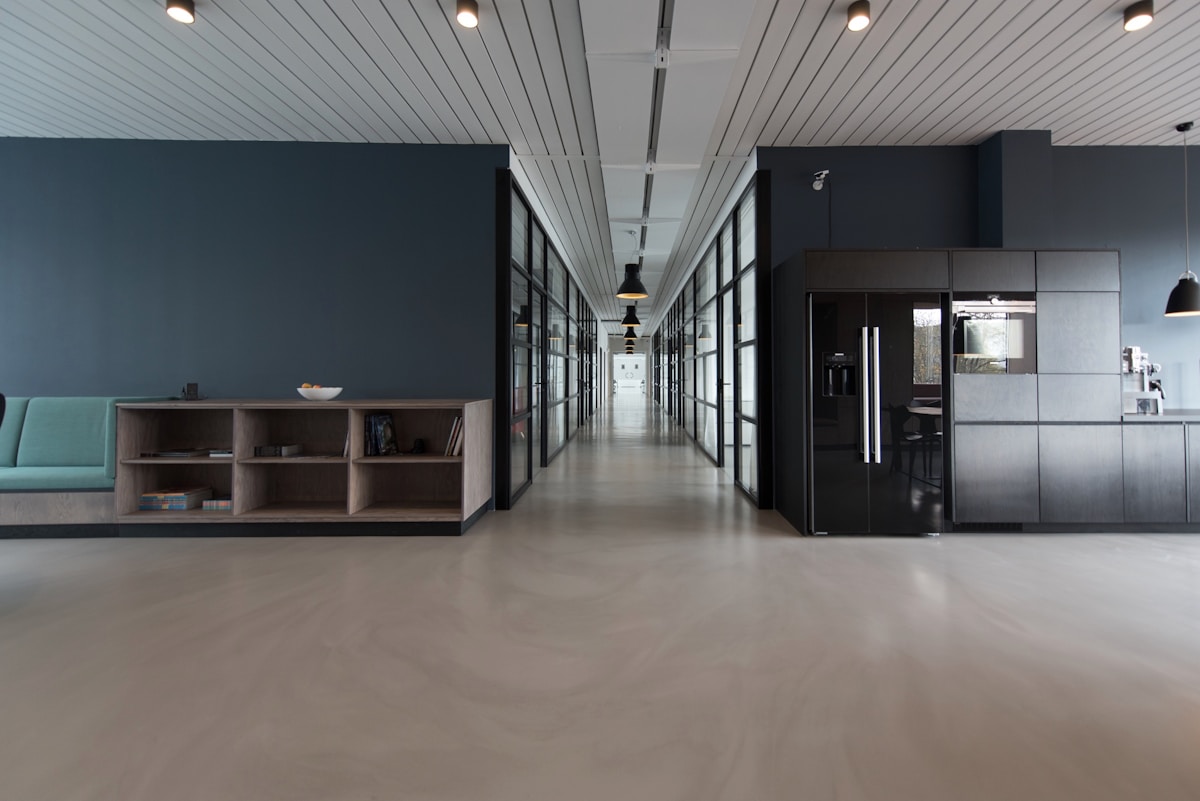
Office building automation transforms commercial property operations through continuous monitoring of critical environmental conditions.
How Office Building Automation Works
Office building automation technology uses wireless IoT sensors to track energy consumption, HVAC performance, indoor environmental quality, and water presence throughout properties. Current transformers measure electricity consumption at the building, floor, tenant, and equipment level, enabling precise cost allocation and waste identification. Smart temperature monitoring sensors track comfort conditions in each zone while CO2 sensors measure ventilation adequacy and occupancy patterns. Water presence sensors protect against leaks in mechanical rooms, restrooms, and tenant spaces where damage could disrupt operations for weeks.
Office Building Automation Components
Energy Monitoring Infrastructure: Current transformers install on electrical panels without service interruption, measuring consumption at building, floor, and circuit levels. Submetering capabilities enable accurate tenant billing based on actual usage rather than estimates or square footage allocations.
Environmental Sensing Network: Temperature, humidity, and CO2 sensors deploy throughout tenant spaces, common areas, and mechanical rooms. These sensors communicate via mesh networks that operate independently of building IT infrastructure, eliminating network security concerns.
Analytics Platform: Cloud-based software aggregates sensor data, applies machine learning algorithms, and generates actionable insights. Dashboards provide visibility at portfolio, building, floor, and zone levels for stakeholders with different operational responsibilities.
Alert and Response System: When conditions deviate from optimal ranges, instant notifications reach designated personnel via SMS, email, or mobile app. Escalation protocols ensure critical issues receive attention even during off-hours. Integration with indoor air quality monitoring ensures tenant health and comfort remain protected.
Office building automation sensor data transmits via cellular or wireless networks to cloud-based analytics platforms that operate 24/7/365. The office building automation system continuously identifies waste during business hours and after hours, comparing actual consumption against expected baselines for each zone and time period. Historical data enables trend analysis, tenant billing documentation, compliance reporting, and evidence-based capital planning that protects property value while optimizing operating expenses.
7 Ways Office Building Automation Improves Operations
Office building automation delivers measurable improvements across multiple operational dimensions. Property managers implementing comprehensive office building automation solutions report consistent results that justify investment while positioning buildings competitively in demanding markets. Understanding these office building automation capabilities helps property owners evaluate platforms and prioritize implementation based on their specific operational challenges and tenant requirements. Similar approaches have transformed operations across smart water leak detection and environmental monitoring applications.
1. After-Hours Energy Waste Elimination
Office buildings typically operate 50-60 hours per week, yet energy consumption during unoccupied periods often reaches 40-50% of peak levels. Office building automation identifies specific sources of after-hours waste, from HVAC systems that continue running after tenants depart to lighting that remains on in empty spaces. Office building automation scheduling adjustments eliminate this waste without requiring manual intervention or tenant coordination.
2. Zone-by-Zone Comfort Optimization
Temperature complaints represent the most common tenant issue in commercial office buildings, directly affecting satisfaction and lease renewal decisions. Office building automation provides granular visibility into conditions across every zone, identifying hot and cold spots that traditional thermostats miss. Property managers using office building automation can proactively address comfort issues before tenants complain, demonstrating responsiveness that strengthens relationships. Similar zone-based approaches have proven effective in healthcare facility monitoring where comfort directly impacts patient outcomes.
3. Accurate Tenant Utility Billing
Office building automation submetering capabilities enable fair utility cost allocation based on actual consumption rather than estimates or square footage ratios. Tenants receive detailed consumption reports showing exactly how much energy their spaces used, eliminating billing disputes that strain relationships. This office building automation transparency often motivates tenants to adopt more efficient practices, further reducing building-wide consumption and costs.
4. Predictive Maintenance Intelligence
Equipment failures disrupt tenant operations and create emergency repair expenses that far exceed planned maintenance costs. Office building automation monitors equipment performance continuously, detecting anomalies that indicate developing problems. Office building automation alerts notify facilities teams about issues weeks before failure, enabling scheduled repairs during convenient times rather than emergency responses that disrupt building operations. Manufacturing facility monitoring applications demonstrate how predictive maintenance eliminates unplanned downtime across industrial environments.
5. Indoor Air Quality Assurance
Research from Harvard demonstrates that indoor environmental quality affects employee productivity by 5-15%, making air quality a competitive differentiator for Class A buildings. Office building automation monitors CO2 levels, temperature, and humidity throughout tenant spaces, ensuring ventilation systems deliver adequate fresh air. Poor air quality increases sick days and reduces cognitive performance, creating costs for tenants that affect lease decisions. Office building automation tracking makes air quality visible and manageable.
6. Water Damage Prevention
Water damage in office buildings creates devastating consequences including tenant displacement, mold remediation requirements, and extended recovery periods. Office building automation sensors deployed in mechanical rooms, restrooms, kitchens, and other water-vulnerable areas detect leaks immediately, enabling rapid response before minor issues become major catastrophes. A single prevented water incident often pays for years of office building automation costs while protecting property value and tenant relationships.
7. Portfolio-Wide Visibility
Property managers overseeing multiple buildings need portfolio-level dashboards that aggregate performance data across all properties. Office building automation platforms provide this visibility, enabling comparison of energy performance, tenant comfort metrics, and equipment health across the portfolio. Best practices from high-performing buildings can be replicated across the portfolio while underperforming properties receive focused attention through office building automation analytics.
Calculate Your Office Building Energy Savings
Understanding your facility’s energy waste potential provides the foundation for office building automation investment decisions. The calculator below helps quantify savings opportunities specific to your facility characteristics and energy costs.

Energy waste reduction calculators reveal your facility’s waste potential. Most commercial buildings waste 30% of energy spending – typically $36,000-$150,000 annually in preventable costs. Calculate your savings now ->
ROI Analysis: Office Building Automation Investment Returns
Office building automation delivers measurable returns that justify investment within months rather than years. A typical 100,000 square foot office building spending $214,000 annually on energy achieves substantial savings through comprehensive office building automation monitoring and optimization. Property managers implementing facility energy consumption reduction strategies through office building automation report consistent results across different building types and tenant mixes.
Typical Office Building Automation Returns (100,000 SF)
- Energy cost reduction: 20-30% = $42,800-$64,200 annual savings
- After-hours waste elimination: $30,000-$60,000 annually recovered
- Avoided water damage: $50,000-$500,000 potential loss prevention
- Staff time savings: 6-10 hours per week = $15,000-$25,000 annually
- Typical monitoring cost: $18,000-$32,000 annually with ROI of 3:1 to 5:1
The ENERGY STAR program reports that commercial buildings can reduce energy consumption by 20-30% through operational improvements without major capital investment. Building automation provides the visibility and analytics needed to identify and capture these savings opportunities that remain invisible to traditional management approaches.
Beyond direct cost savings, office building automation improves net operating income (NOI) through reduced operating expenses. For properties valued using cap rate methodologies, every dollar saved in operating costs translates to approximately $10-$15 in property value at typical cap rates. A building saving $60,000 annually through office building automation may increase property value by $600,000-$900,000, representing substantial returns beyond operating expense reduction. Similar value protection strategies using office building automation approaches apply across data center monitoring applications where uptime directly affects tenant relationships.

Office building automation dashboards provide facility managers with real-time visibility into critical operational metrics.
Office Building Automation vs Traditional BMS
Many property managers question whether office building automation provides value beyond existing building management systems. Understanding the fundamental differences between office building automation and legacy BMS platforms clarifies how IoT solutions complement or replace traditional approaches while delivering capabilities that these systems cannot match regardless of programming or configuration.
Traditional BMS Limitations
Legacy building management systems provide control but limited analytics. These platforms excel at executing programmed schedules and maintaining setpoints but cannot identify waste patterns, predict equipment failures, or optimize across interconnected systems. Property managers relying solely on BMS often discover problems only after tenants complain or utility bills arrive. Similar limitations affect retail facility monitoring where traditional approaches miss opportunities for optimization.
IoT Analytics Advantages
Modern building automation applies machine learning to sensor data, identifying patterns and anomalies that human operators cannot detect manually. The system learns baseline consumption patterns for each zone and time period, flagging deviations that indicate waste or developing problems. This continuous analysis happens automatically, requiring no ongoing programming or operator attention. Restaurant monitoring applications demonstrate similar advantages where continuous analysis identifies issues traditional approaches miss.
Deployment Comparison
Traditional BMS installations require extensive wiring, specialized contractors, and weeks or months of commissioning. Changes to programming require vendor involvement and associated costs. Modern building automation deploys wirelessly in days without tenant disruption, with cloud-based software that updates automatically. Configuration changes happen through intuitive interfaces rather than specialized programming. Warehouse monitoring implementations demonstrate rapid deployment capabilities across large facilities.
Cost Structure Differences
BMS systems require substantial capital investment with ongoing maintenance contracts and periodic upgrade costs. Building automation typically operates on subscription models that use operating budget rather than capital, with costs that scale based on building size and monitoring scope. This structure eliminates capital approval barriers while ensuring property managers receive continuous software improvements without additional investment.
Office building automation complements existing BMS rather than requiring replacement. The office building automation analytics layer adds intelligence to control systems already in place, identifying optimization opportunities that BMS can execute. Property managers gain the best of both approaches, maintaining investment in existing infrastructure while adding office building automation capabilities that transform operational effectiveness.
Implementing Office Building Automation
Successful office building automation implementation follows a structured process that minimizes disruption while maximizing operational improvements. Property managers should expect comprehensive support throughout office building automation deployment, from initial assessment through ongoing optimization. The typical office building automation implementation timeline spans approximately 10 days from project initiation to full operational status.
Phase 1: Facility Assessment (Day 1)
Implementation begins with a comprehensive building walkthrough that identifies monitoring priorities including electrical distribution architecture, HVAC system configuration, tenant space layouts, and water-vulnerable areas. Engineers map sensor placement strategy based on building characteristics, tenant requirements, and operational priorities. This assessment establishes the foundation for effective monitoring that addresses specific building challenges. Similar assessment approaches prove effective in school facility monitoring where diverse building types require customized deployment strategies.
The assessment phase also identifies existing systems that can integrate with building automation, including BMS platforms, tenant portals, and property management software. Integration planning ensures new monitoring capabilities complement existing workflows rather than creating additional management burden.
Phase 2: Sensor Installation (Days 2-6)
Wireless sensors deploy throughout the building during normal business hours without tenant disruption. Current transformers install on electrical panels without service interruption, while environmental sensors mount in tenant spaces, common areas, and mechanical rooms. Water sensors position in restrooms, kitchens, mechanical rooms, and other vulnerable areas where leaks could cause damage. Deployment approaches parallel those used in food processing facility monitoring where production continuity requirements demand non-disruptive installation.
Sensors communicate via mesh networks that self-configure and operate independently of building IT infrastructure. This approach eliminates network security concerns while ensuring reliable data transmission even in buildings with challenging wireless environments.
Phase 3: Training and Baseline (Days 7-10)
Property management, facilities staff, and building engineers receive comprehensive training on dashboards, alert protocols, reporting tools, and tenant billing features. Training ensures all stakeholders can leverage automation capabilities effectively for their specific responsibilities. During this phase, the system establishes baseline consumption and comfort patterns for each zone and time period.
Alert thresholds configure based on tenant schedules, building specifications, and operational priorities. The system begins identifying immediate optimization opportunities while establishing the baseline data needed for ongoing waste identification and equipment health monitoring.
Phase 4: Optimization and Expansion
Following initial deployment, ongoing office building automation refinement optimizes alert thresholds, schedules, and reporting based on actual building performance data. Identified energy savings opportunities receive prioritized implementation. Quarterly business reviews document NOI improvement and tenant satisfaction impacts while identifying additional office building automation optimization opportunities as the system learns building-specific patterns.
Property managers overseeing multiple buildings typically expand office building automation across their portfolios based on results from initial deployments. The subscription model scales efficiently, enabling portfolio-wide optimization without proportional increases in management overhead.
Take Action: Transform Your Office Building Operations
Every day without comprehensive building automation represents missed energy savings, preventable equipment failures, and tenant satisfaction opportunities that compound into significant competitive disadvantages. A free facility assessment identifies specific savings opportunities, equipment risks, and optimization potential unique to your building characteristics and tenant mix.
Property managers implementing building automation typically see first results within weeks of deployment, with full ROI achievement within 4-12 months depending on building size and waste levels. The subscription model eliminates capital budget barriers while ensuring continuous access to platform improvements and technical support.
The U.S. Department of Energy emphasizes that commercial buildings represent the largest opportunity for energy efficiency improvement in the built environment. Office building automation captures these opportunities through proven technology that thousands of commercial properties already use to reduce costs, improve tenant satisfaction, and protect asset value.
Selecting an Office Building Automation Provider
Not all building automation platforms deliver equivalent capabilities or results. Property managers evaluating providers should assess specific criteria that determine whether solutions match their operational requirements, tenant needs, and portfolio management objectives.
Essential Provider Evaluation Criteria
- Multi-Tenant Capabilities: The platform must support tenant-level monitoring, billing, and reporting with appropriate access controls for property managers, building engineers, and tenant administrators.
- Portfolio Scalability: Solutions should aggregate data across multiple properties with consistent interfaces and reporting, enabling portfolio-level optimization and performance comparison.
- BMS Integration: Look for platforms that complement existing building management systems rather than requiring replacement, maximizing value from previous infrastructure investments.
- Submetering Accuracy: Tenant billing requires precise measurement capabilities with audit-ready documentation that eliminates disputes and supports lease compliance verification.
- Compliance Support: Providers should offer automated reporting for ENERGY STAR benchmarking, LEED documentation, and local energy disclosure requirements.
- Performance Guarantees: Select providers who stand behind their solutions with measurable performance commitments rather than vague promises of improvement.
- Ongoing Support: Evaluate technical support availability, response times, and quarterly business review processes that ensure continuous optimization rather than set-and-forget deployment.
The right building automation partner understands commercial office operations and tailors solutions to property management workflows. Request references from similar buildings and verify claimed capabilities through demonstrations using actual building data rather than generic presentations.
Frequently Asked Questions About Office Building Automation
How does office building automation differ from our existing BMS?
Traditional building management systems provide control capabilities, executing schedules and maintaining setpoints. Office building automation adds an analytics layer that identifies waste patterns, predicts equipment failures, and optimizes across systems in ways BMS cannot accomplish.
The systems complement each other. Office building automation identifies optimization opportunities while BMS executes improvements. Most property managers find that office building automation reveals significant savings potential their BMS was technically capable of achieving but lacked the intelligence to identify.
Integration with existing BMS preserves infrastructure investment while adding office building automation capabilities that transform operational effectiveness.
Will installation disrupt tenants?
Modern office building automation uses wireless sensors that install during normal business hours without requiring service interruptions, network access, or tenant coordination. Current transformers attach to electrical panels with power remaining on. Environmental sensors mount discretely using battery-powered wireless technology requiring no wiring.
Most tenants remain unaware that office building automation installation is occurring until they receive notification about new monitoring capabilities. The typical 10-day implementation timeline includes all deployment activities without requiring after-hours access.
How does tenant utility billing work?
Submetering capabilities measure actual energy consumption at the tenant level rather than estimating based on square footage or operating hours. Comprehensive monitoring that stops hidden building problems includes detailed consumption reports showing exactly how much energy each tenant space used during billing periods.
Automated reporting generates audit-ready documentation that supports lease compliance verification while eliminating billing disputes. Many tenants appreciate the transparency, and detailed consumption data often motivates more efficient behavior that benefits overall building performance.
What happens when the system detects a problem after hours?
Office building automation operates 24/7/365 with configurable alert protocols that notify designated personnel immediately when conditions deviate from acceptable ranges. Escalation rules ensure critical issues like water leaks or equipment failures receive attention regardless of when they occur.
Property managers configure notification preferences including SMS, email, and mobile app alerts. Office building automation distinguishes between urgent issues requiring immediate response and anomalies that can wait for normal business hours.
Can building automation help with LEED or ENERGY STAR certification?
Office building automation provides the continuous energy tracking and documentation required for LEED certification and ENERGY STAR benchmarking. Automated reporting generates submission-ready data without manual compilation. Commercial real estate monitoring applications demonstrate how continuous data collection supports certification requirements.
Many buildings achieve certification eligibility through operational improvements identified by office building automation, without requiring capital investment in equipment upgrades.
How quickly will we see results from building automation?
Most property managers identify initial savings opportunities within the first week of office building automation as the system establishes baseline patterns and detects obvious waste. Quick wins including after-hours waste elimination and scheduling optimization deliver measurable results within 30 days.
Full office building automation ROI achievement typically occurs within 4-12 months depending on building size and current waste levels. Buildings with significant after-hours waste see faster returns.
Do we need to hire additional staff to manage building automation?
Office building automation reduces management burden rather than increasing it. Automated alerts eliminate manual checking routines while predictive analytics prevent emergency responses. Predictive maintenance approaches demonstrate how monitoring reduces operational workload.
Property managers typically report saving 6-10 hours per week through office building automation of routine monitoring tasks, complaint investigation, and reporting.
What security considerations apply to building automation data?
Enterprise office building automation platforms use military-grade encryption for data transmission and storage. Sensors communicate via dedicated mesh networks that operate independently of building IT infrastructure, eliminating network security concerns.
Multi-tiered access controls ensure property owners see portfolio performance, property managers access building-level data, and building engineers monitor system specifics. Tenant data remains protected with role-appropriate visibility.
Transform Your Office Building Operations
Office building automation provides the real-time visibility and predictive intelligence your property needs to reduce costs, prevent equipment failures, and optimize tenant satisfaction. Every day without comprehensive monitoring represents missed energy savings, preventable equipment failures, and competitive disadvantages that undermine profitability and property value.
Your free facility assessment includes:
- Comprehensive energy consumption analysis and baseline establishment
- Equipment-level monitoring recommendations and priority identification
- Savings opportunity analysis with projected ROI calculation
- Deployment timeline and implementation plan without tenant disruption
- Office building-specific optimization assessment and certification review
Our Guarantee
We guarantee a 10% energy reduction within 12 months, or we work for free until it is achieved.
Email us at detect@envigilance.com | We reply within 24 hours
Related Industries
Operational challenges affect all types of facilities. Discover how other industries benefit from comprehensive building automation: