Rooftop Unit Monitoring: Why 80% of RTU Failures Are Preventable

Commercial HVAC systems consume roughly 40% of a building’s total energy according to the U.S. Department of Energy. For facilities relying on packaged rooftop units, that percentage often climbs higher because RTUs operate in the harshest environment your building has to offer – exposed to temperature extremes, UV radiation, precipitation, and airborne debris every single day. When those units lose even 5% efficiency per year from deferred maintenance, you are quietly hemorrhaging thousands in wasted energy without a single alarm going off.
If your facility runs five or ten RTUs and you are not tracking their performance in real time, the math is working against you. A single undetected condenser fan failure can cascade into a $6,500 compressor replacement plus emergency labor, turning a $400 fix into an $8,000 disaster. Multiply that across a portfolio of buildings, and you are looking at tens of thousands drained from your operating budget every year on problems that rooftop unit monitoring would have caught weeks in advance. Proactive equipment maintenance strategies start with visibility into what is actually happening on your roof.
This guide breaks down exactly how rooftop unit monitoring works, what it costs, what it saves, and how forward-thinking facility managers are using energy monitoring to transform their HVAC operations from reactive firefighting to proactive optimization.
The numbers reveal why smart facility managers are investing in rooftop unit monitoring
The Hidden Energy Crisis on Your Roof
Your rooftop units are probably wasting more energy than you realize. According to the U.S. Energy Information Administration, space heating alone accounts for about 32% of all commercial building energy use, with cooling and ventilation adding substantially to that total. Rooftop units handle the bulk of this load in most small and mid-size commercial buildings, making them the single largest energy consumer on your utility bill. Yet these units operate in one of the harshest environments imaginable – directly exposed to temperature extremes, precipitation, UV degradation, and airborne contaminants that accelerate wear and reduce energy efficiency every season.
Here is the core problem with traditional RTU management: these units sit out of sight and out of mind until something goes wrong. According to ENERGY STAR, at least 25% of all rooftop HVAC units are oversized, resulting in increased energy costs and excessive equipment wear from short-cycling. Undersized units run constantly, wearing out faster and never achieving comfortable conditions. Without rooftop unit monitoring, facility managers have no way to know which category their equipment falls into until it fails.
But sizing problems are just the beginning. Consider what happens when basic maintenance gets deferred:
The Compound Cost of Deferred RTU Maintenance
- Dirty coils force systems to work significantly harder – the DOE found a moderately dirty condenser coil increases electricity use by 39% on a 3-ton unit and 47% on a 5-ton system
- Clogged filters restrict airflow, causing compressors to overheat and fail prematurely
- Failed condenser fan motors can lead to compressor damage within days if undetected
- Refrigerant leaks compound over months, reducing capacity while increasing runtime and costs
- Belt wear causes slippage that reduces airflow without triggering obvious failure alarms
Industry data consistently shows that running HVAC equipment to failure costs 3-10 times more than proper maintenance programs, and every $1 of deferred maintenance becomes $4 in capital renewal costs. What should be routine $200-$300 maintenance visits can snowball into $14,000+ disasters when compressor failures, refrigerant restrictions, and expansion valve replacements stack up from years of neglect. Reducing energy costs starts with catching these compounding problems before they drain your budget.
The challenge is that these problems develop invisibly. A facility manager walking past an RTU cannot see that its efficiency has dropped 15% or that its compressor is running 40% longer than it should. Without rooftop unit monitoring and performance data, the only indication of trouble is often complete failure at which point you are paying emergency rates and losing business during downtime. Monitoring as a Service changes this equation entirely by creating continuous visibility into every RTU on your roof.
What Rooftop Unit Monitoring Actually Tracks
Rooftop unit monitoring goes far beyond simply knowing whether a unit is running. Modern IoT sensors create comprehensive visibility into every aspect of RTU performance, enabling the kind of data-driven management that was previously only available to facilities with building automation systems costing $75,000-$200,000 or more.
Supply and Return Air Temperatures: The temperature differential between supply and return air reveals cooling and heating effectiveness. A unit that should produce 55 degrees supply air but delivers 62 degrees has a developing problem – low refrigerant, dirty coils, or airflow restrictions. Rooftop unit monitoring with temperature monitoring catches these deviations immediately, not when tenants start complaining.
Runtime and Cycling Patterns: How often does each unit run, and for how long? Short-cycling indicates oversizing, thermostat problems, or refrigerant issues. Continuous operation suggests undersizing, extreme loads, or efficiency degradation. Rooftop unit monitoring establishes baselines and alerts when patterns change – the earliest warning of problems that temperature monitoring systems can identify before failures occur.
Energy Consumption: Power monitoring at the electrical feed shows exactly how much electricity each RTU consumes. More importantly, it shows consumption relative to output – the efficiency metric that matters. A unit consuming 20% more power to maintain the same temperature is a unit heading toward failure.
Fault Detection and Diagnostics: Advanced rooftop unit monitoring systems incorporate automated fault detection. This capability automatically identifies problems like faulty sensors, malfunctioning components, refrigerant issues, and economizer failures. Maintenance staff get alerts before problems cascade into expensive repairs.
Economizer Operation: Economizers use outdoor air for free cooling when conditions allow, but they are notoriously prone to failure. Stuck dampers, failed actuators, and improper control settings can waste enormous energy. According to PNNL research funded by the DOE Building Technologies Office, RTUs retrofitted with advanced controls achieved 24-35% energy and cost savings when combining multi-speed fan control, integrated economizer controls, and demand-controlled ventilation. Proper economizer operation was a major contributor to those savings.
Indoor Environmental Quality: Air quality monitoring in occupied spaces validates that RTUs are maintaining proper ventilation. CO2 levels rising above 1,000 ppm indicate inadequate outdoor air, possibly from a failed economizer damper or incorrect ventilation settings. Rooftop unit monitoring correlates equipment operation with space conditions, identifying units that run constantly without achieving setpoints.

Most facility managers only think about rooftop units when they fail. Continuous rooftop unit monitoring reveals efficiency losses, predicts failures, and prevents emergency repairs that cost 3-10x more than scheduled maintenance.
The Five RTU Problems Draining Your Budget
Based on industry research and real-world facility data, five categories of RTU problems account for the majority of wasted energy and unexpected repair costs. Rooftop unit monitoring catches all five – often weeks or months before they would otherwise be discovered.
1. Dirty Coils and Restricted Airflow: Condenser coils exposed to outdoor air accumulate dirt, debris, and organic matter. In some regions, cottonwood seeds can blanket coils within a single season. The DOE has documented that a moderately dirty coil increases electricity use by 39-47% depending on unit size, while the EPA notes that just 1/100th of an inch of buildup on an evaporator coil can reduce its efficiency by 5%. Rooftop unit monitoring detects this through elevated discharge pressures, increased runtime, and reduced temperature differential – alerting your team before efficiency losses compound into demand charge spikes.
2. Refrigerant Issues: Low refrigerant charge reduces cooling capacity while increasing runtime. The unit runs longer to achieve the same cooling, wasting energy and wearing components. Overcharge causes high head pressure and reduced efficiency. Rooftop unit monitoring identifies refrigerant problems through temperature and pressure anomalies, superheat calculations, and capacity vs. runtime analysis. Early detection prevents the compressor damage that turns a $200 refrigerant adjustment into a $4,000+ compressor replacement.
3. Economizer Failures: Economizers provide free cooling by bringing in outdoor air when temperatures permit. When they fail – stuck open, stuck closed, or operating at wrong setpoints – they waste enormous energy. A stuck-open damper in winter can increase heating costs by 50% or more. According to the DOE Better Buildings Initiative, older inefficient RTUs waste $1,000-$3,700 per unit annually, and economizer failures are a major contributor. Rooftop unit monitoring tracks damper position, mixed air temperature, and outdoor conditions to verify proper economizer operation continuously.
4. Fan and Motor Problems: Belt-driven fans require periodic belt replacement and tension adjustment. Worn belts slip, reducing airflow without triggering obvious failures. Failed condenser fan motors can destroy compressors within days if not detected. Rooftop unit monitoring detects motor problems through current monitoring and temperature patterns. A condenser fan motor drawing increasing current is a motor under stress – catching it early means a $400 motor replacement instead of an $8,000 compressor disaster.
5. Control and Sensor Failures: Thermostats drift out of calibration. Sensors fail or report incorrect values. Control boards develop intermittent faults. A thermostat reading 3 degrees low causes constant overcooling and wasted energy. Commercial facility monitoring correlates multiple data points to identify sensor drift and control problems that would otherwise go undetected for months or years, protecting both your water systems and HVAC equipment simultaneously.
How IoT Sensors Transform RTU Management
The technology enabling rooftop unit monitoring has changed dramatically in recent years. Wireless sensors now cost a fraction of what they did five years ago. Cloud platforms process data in real time, applying analytics that identify problems human observation would miss. According to Whole Building Design Guide research, HVAC systems account for 39% of the energy used in commercial buildings, and high-performance approaches can deliver 30-40% reductions in annual energy costs with payback periods of three to five years.
Temperature sensors deploy to supply air, return air, and outdoor air measurement points. These sensors log data continuously, establishing normal patterns and alerting immediately when deviations occur. A supply air temperature climbing from 55 to 62 degrees over two weeks indicates a developing problem – visible in the data long before occupants notice discomfort.
Power monitoring at the electrical feed shows exactly how much energy each RTU consumes. When a unit that normally draws 8 kW starts pulling 10 kW to maintain the same temperature, something has changed. Maybe dirty coils, maybe low refrigerant, maybe a failing component – but definitely something worth investigating before it gets worse. Energy monitoring systems make this level of visibility accessible to facilities that could never justify the cost of traditional BMS installations.
Current transformers on motors track amperage in real time. A condenser fan motor showing elevated current is a motor under stress. A compressor drawing higher amps than baseline may have refrigerant problems or mechanical issues. Rooftop unit monitoring catches these trends and alerts maintenance before catastrophic failure, supporting the building energy management strategies that separate proactive facilities from reactive ones.
What Comprehensive RTU Monitoring Delivers
- Real-time visibility into RTU performance across all units on your roof
- Automated fault detection that identifies problems before failures occur
- Energy consumption tracking that reveals waste and optimization opportunities
- Mobile alerts when any parameter exceeds normal thresholds
- Historical trending that supports maintenance planning and capital decisions
- Documentation for warranty claims, compliance, and asset management
The ROI of Rooftop Unit Monitoring: Real Numbers
The economics of rooftop unit monitoring work because the problems it prevents and the waste it eliminates far exceed the monitoring investment. Consider a 50,000 square foot retail building with six 15-ton RTUs. These units collectively consume approximately $48,000-$60,000 annually in electricity for cooling and heating. PNNL research shows that advanced controls and monitoring can deliver 24-60% energy savings depending on climate and system configuration. Even at a conservative 15% improvement, that represents $7,200-$9,000 in annual energy savings potential from a single building.
Now factor in avoided emergency repairs. Industry data consistently shows unplanned HVAC maintenance costs 3-10 times more than scheduled service. One compressor failure avoided saves $4,000-$8,000. One economizer problem detected before a winter of wasted heating saves $2,000-$5,000. One condenser fan motor caught before it destroys a compressor saves $6,000-$10,000 in cascade costs. For facilities exploring guaranteed energy cost savings, the combined impact of efficiency gains and avoided repairs typically delivers payback within 6-12 months.
Hypothetical ROI Example: 50,000 SF Retail Building
- Annual RTU energy cost: $54,000
- Efficiency improvement (15%): $8,100 saved
- Avoided emergency repairs (1-2/year): $6,000-$12,000 saved
- Extended equipment life (2-3 years): Capital deferral of $15,000-$30,000 per unit
- Potential annual savings: $14,000-$20,000+
The Pacific Northwest National Laboratory developed an RTU Comparison Calculator that helps facility managers evaluate life-cycle costs for different efficiency scenarios. Their research consistently shows that monitoring and controls optimization delivers payback periods under two years for most commercial applications. Equipment lifespan extension provides additional value – commercial RTUs typically last 15-20 years with proper maintenance, but neglected units may fail in 10-12 years. Extending equipment life by 3-5 years defers $15,000-$30,000 per unit in replacement costs.
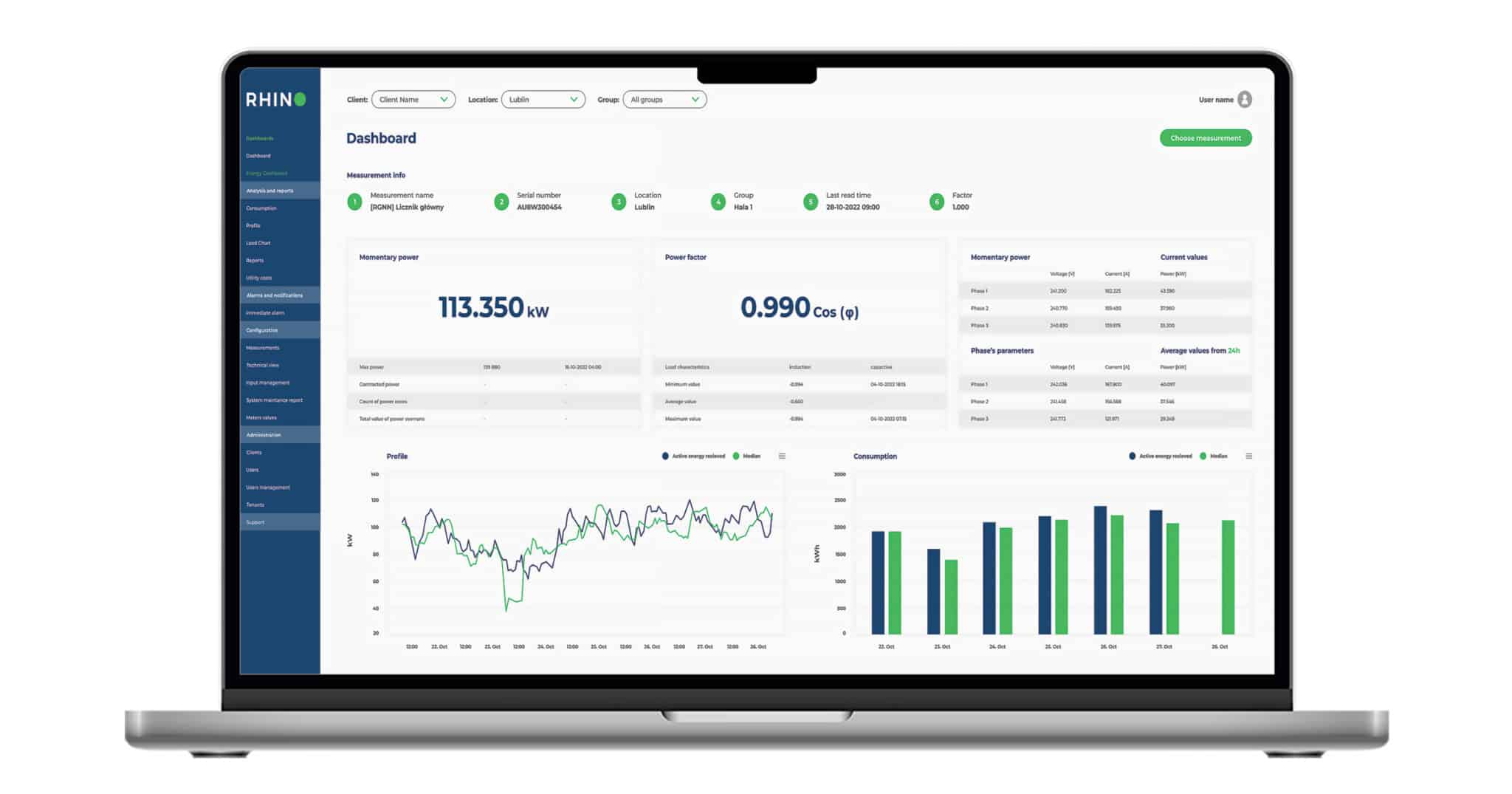
Real-time rooftop unit monitoring transforms reactive maintenance into proactive optimization. Facility teams can track energy consumption, detect faults, and schedule repairs before equipment fails.
The Monitoring as a Service Advantage
Traditional building automation systems capable of comprehensive rooftop unit monitoring cost $75,000-$200,000 or more. That is capital most facility operators cannot justify, especially for buildings without existing BMS infrastructure. Monitoring as a Service (MaaS) delivers the same visibility through affordable monthly subscriptions – converting what would be a large capital expenditure into a manageable operating expense.
No Capital Investment: Sensors and installation are typically included in the service. You are not buying equipment that depreciates – you are subscribing to outcomes. This makes rooftop unit monitoring accessible to facilities that have been operating blind because traditional BMS installations were never in the budget.
Expert Analysis: MaaS providers do not just deliver data – they deliver insights. Monitoring specialists who understand HVAC systems analyze your RTU performance data and alert you to actionable issues. Instead of figuring out what temperature trends mean, you get clear recommendations backed by real performance data.
No IT Burden: Cloud-based platforms eliminate the need for on-premises servers, software updates, or IT support. The provider handles all technical infrastructure. Your team focuses on acting on insights, not managing technology.
Rooftop unit monitoring through MaaS works particularly well for facilities without dedicated engineering staff. Retail stores, restaurants, office buildings, and schools often lack the internal expertise to interpret HVAC performance data. MaaS bridges this gap by providing both the monitoring technology and the expertise to use it effectively.
How Much Are Your Rooftop Units Really Costing You?
Discover how continuous monitoring can protect your HVAC investment and cut energy waste. Our experts will assess your current RTU performance and show you exactly where your building is losing money.
Implementation: From Blind Spots to Complete Visibility
Implementing rooftop unit monitoring follows a structured process that minimizes disruption while maximizing value. Most implementations complete within 2-3 weeks from initial assessment to full operation.
Week 1 – Assessment and Planning: A facility assessment identifies each RTU on your roof – make, model, tonnage, age, condition, and zones served. This inventory becomes the foundation for monitoring strategy. The assessment also identifies optimal sensor placement and any special considerations for your specific equipment, including temperature monitoring requirements for critical spaces.
Week 2 – Installation: Wireless sensors deploy to each RTU with minimal disruption. Temperature sensors, current transformers, and any additional monitoring points install in 1-2 hours per unit. Most installations happen during normal business hours without affecting building operations.
Week 3 – Baseline and Commissioning: The first week of data collection establishes baseline performance for each RTU. The platform learns what normal operation looks like for your specific equipment in your specific climate. This baseline enables accurate anomaly detection going forward.
Many facilities discover issues within the first 30 days that had gone undetected for years. Economizers stuck in wrong positions. Units running at 70% efficiency due to refrigerant problems. Water leaks from condensate drains causing roof damage. The initial discovery phase often pays for the monitoring implementation within the first quarter.
Rooftop Unit Monitoring Across Industries
While the technology remains consistent, different industries apply rooftop unit monitoring to address their specific operational challenges and regulatory requirements.
Retail: Multi-location retailers face the challenge of managing dozens or hundreds of rooftops across different climates. Monitoring programs at major retailers have delivered 20-40% reductions in maintenance costs and electricity consumption depending on location. Uncomfortable stores lose customers immediately, making rooftop unit monitoring a revenue protection strategy as much as a cost reduction tool.
Restaurants: Kitchen environments create extreme demands on HVAC systems. Makeup air requirements, hood exhaust, and cooking heat loads stress rooftop units in ways that accelerate wear. Rooftop unit monitoring helps restaurants maintain comfort while managing the complex interaction between kitchen exhaust and HVAC operations.
Healthcare: Healthcare facilities have stringent requirements for temperature and air quality that directly affect patient care and regulatory standing. Rooftop unit monitoring ensures compliance with standards like ASHRAE 170 while maintaining the precise environmental conditions that healthcare spaces demand.
Schools: Educational facilities operate on tight budgets with aging infrastructure. Rooftop unit monitoring helps schools prioritize maintenance spending on units that need it most while documenting performance for bond measures and capital planning. Classroom comfort directly affects student performance and learning outcomes.
Warehouses and Manufacturing: Warehouse and manufacturing facilities often have large RTUs serving vast spaces with unique challenges – temperature stratification, dock door impacts, process heat loads, and seasonal variations. Rooftop unit monitoring helps these facilities maintain product integrity and worker comfort while optimizing energy consumption across large footprints.
Commercial real estate operators managing multiple properties find particular value in comparing RTU performance across a portfolio. Data centers and food processing facilities with critical environmental requirements use rooftop unit monitoring as part of comprehensive environmental control strategies that protect both equipment and product quality.
The Bottom Line on Rooftop Unit Monitoring
Your rooftop units are generating data right now. Temperature patterns, energy consumption, runtime cycles – information that reveals exactly which units need attention, which are wasting energy, and which are heading toward failure. The only question is whether you are capturing it. The facilities that implement rooftop unit monitoring gain structural advantages that compound over time: lower energy costs, fewer emergency repairs, extended equipment life, and better capital planning.
You can reduce the risk of HVAC breakdowns by up to 95% with proactive maintenance, according to facility management research. Rooftop unit monitoring makes that proactive approach possible by providing the visibility you need to act before problems become emergencies. The technology exists, the economics work, and the only risk is waiting until your next RTU failure reminds you what reactive management actually costs.
How Much Is Your Building Wasting on Energy?
According to the EPA, most commercial buildings waste 25% on energy. The ones that monitor it don’t. See what you could save in 30 seconds.

Frequently Asked Questions About Rooftop Unit Monitoring
What types of buildings benefit most from rooftop unit monitoring?
Any commercial building with packaged rooftop units can benefit from rooftop unit monitoring, but the greatest returns typically occur in retail stores, restaurants, schools, office buildings, and light industrial facilities where RTUs handle the majority of heating and cooling loads. Buildings with multiple RTUs see particular value because monitoring reveals which units perform well and which need immediate attention. Facilities without existing building management systems gain the most dramatic improvement in visibility – rooftop unit monitoring provides capabilities that previously required $100,000+ BMS installations, now accessible through affordable monthly subscriptions that deliver real-time fault detection and energy tracking.
How much does rooftop unit monitoring cost?
Rooftop unit monitoring through Monitoring as a Service starts at $750 per month for energy-focused monitoring, with costs varying based on the number of units and scope of coverage. This includes sensors, installation, cloud platform access, 24/7 monitoring, and expert analysis. Compare this against the $14,000+ cost of a single deferred maintenance cascade or the $7,000-$12,000 in annual energy waste from inefficient operation. Most facilities see positive ROI within the first 6-12 months through a combination of energy savings, avoided emergency repairs, and extended equipment life. A single avoided compressor failure often pays for an entire year of monitoring.
How quickly can rooftop unit monitoring detect problems?
Rooftop unit monitoring detects developing problems within hours to days of onset. Temperature anomalies, efficiency drops, and abnormal operating patterns become visible immediately in monitoring data. Compare this to traditional approaches where problems might go undetected for weeks or months until scheduled maintenance or complete failure. Real-time alerting ensures facility managers know about critical issues within minutes of threshold violations. A condenser fan motor failure that would have destroyed a compressor over the weekend gets caught Friday afternoon, allowing scheduled repair Monday morning at standard rates instead of emergency pricing.
Does rooftop unit monitoring require modifying existing equipment?
No. Rooftop unit monitoring uses non-invasive sensors that attach to existing equipment without modification. Temperature sensors clamp to pipes or mount in airstreams. Current transformers clip around wires without disconnection. No drilling, cutting, or permanent changes to equipment are required, which preserves all manufacturer warranties. This approach allows monitoring to work with RTUs of any age or manufacturer. Whether your units are brand new or 15 years old, RTU performance sensors provide full visibility into their operation and help you meet building performance standards without expensive retrofits.
What energy savings can rooftop unit monitoring achieve?
Energy savings from continuous RTU monitoring vary based on current equipment condition and operational practices. PNNL research funded by the DOE Building Technologies Office found 24-35% energy savings for gas furnace RTUs and 20-60% for heat pump RTUs when retrofitted with advanced monitoring and controls. More conservatively, facilities typically achieve 15-25% energy reduction through identification and correction of efficiency problems like dirty coils, refrigerant issues, and economizer failures. Savings come from multiple sources simultaneously, and the DOE Better Buildings Initiative confirms that older inefficient RTUs waste $1,000-$3,700 per unit annually – waste that continuous RTU performance tracking systematically eliminates.
How does rooftop unit monitoring work with existing HVAC contractors?
Rooftop unit monitoring complements existing HVAC contractor relationships rather than replacing them. The monitoring platform identifies what needs attention, and contractors perform the actual repairs and maintenance. This makes contractor visits more productive because technicians arrive knowing exactly what issues to address rather than spending hours on diagnostics. Many contractors appreciate working with monitored facilities because they can demonstrate the value of their maintenance work through improved performance data. Monitoring also helps validate that repairs were effective and that equipment returns to baseline operation, creating accountability that benefits everyone involved.
Can rooftop unit monitoring extend equipment lifespan?
Yes. Commercial RTUs typically last 15-20 years with proper maintenance, but neglected units may fail in 10-12 years. Rooftop unit monitoring extends equipment life by catching stress conditions before they cause permanent damage. A compressor running under high head pressure due to dirty coils wears out years faster than one operating within design parameters. Extending RTU lifespan by even 2-3 years defers significant capital expenditure. With replacement costs of $15,000-$30,000 per unit, the capital planning benefits of monitoring often exceed the direct operational savings. For logistics and distribution facilities with dozens of units, this equipment life extension translates to hundreds of thousands in deferred replacement costs.
How long does it take to implement rooftop unit monitoring?
Most rooftop unit monitoring implementations complete within 2-3 weeks from initial assessment to full operation. Sensor installation typically takes 1-2 hours per RTU and happens during normal business hours without disrupting building operations. Wireless sensors require no complex wiring or infrastructure changes. The first month of operation establishes baseline performance for each unit. By month two, the system actively identifies anomalies and provides actionable insights. Many facilities discover and correct significant issues within the first 30 days of monitoring – problems like stuck economizer dampers, refrigerant leaks, and indoor air quality deficiencies that had been silently draining budgets for years.
Stop Losing Money on Your Rooftop
Your RTUs are running right now. Some are operating efficiently. Others are wasting energy, heading toward failure, or both. Rooftop unit monitoring tells you which is which – before you find out the hard way.
- + Real-time visibility into every RTU on your roof
- + Automated fault detection that catches problems before failures
- + Energy consumption tracking that reveals waste and savings opportunities
- + Expert analysis from specialists who understand commercial HVAC
- + Equipment life extension that defers $15,000-$30,000+ per unit in capital costs
Our Guarantee
Spending over $10K/month without BMS? We guarantee a 10% reduction in energy consumption in 12 months, or we work for free until we deliver it.
From $750/month – Learn more
Email us at detect@envigilance.com | We reply within 24 hours