Retail Energy Waste: Stop Losing $15K-$30K Per Store in 2026

American retailers spend over $190 billion annually powering commercial buildings, and up to 30% of that energy is completely wasted through inefficiencies that nobody can see on a monthly utility bill. For a mid-size retail store spending $3,000-$5,000 per month on utilities, that translates to $15,000-$30,000 disappearing every year from seven distinct sources of retail energy waste operating silently in the background.
The problem is not that your team is doing something wrong. The problem is that traditional utility bills arrive 30 days late showing only total consumption with zero visibility into when, where, or why the waste occurs. Your HVAC runs overnight conditioning empty sales floors. Refrigeration compressors degrade by 2-4% annually without anyone noticing. Phantom loads from hundreds of devices in standby mode consume power around the clock. Each source of retail energy waste is individually manageable, but together they compound into a five-figure annual drain that most facility managers cannot detect without granular energy monitoring data.
This guide exposes all seven sources of retail energy waste draining your stores, shows you how to detect each one, and lays out a 30-day action plan to start eliminating them this month. You will walk away knowing exactly which waste sources hit your operation hardest and what each one costs you annually.
Seven hidden sources of retail energy waste cost mid-size stores $15,000-$30,000+ annually. Most retailers have zero visibility into these problems until monitoring makes the invisible visible.
Understanding Retail Energy Waste: The Invisible Profit Killer
Your monthly utility bill tells you almost nothing about retail energy waste. A store receiving a $3,500 bill has no idea whether that represents efficient operation or catastrophic waste. Without real-time visibility, you cannot distinguish between necessary costs and preventable losses. That single monthly number hides seven distinct problems operating 24 hours a day, 7 days a week.
The compounding effect is what makes retail energy waste so destructive. A store wasting $2,000 monthly loses $24,000 annually. Over five years, that single location hemorrhages $120,000. For a 10-store chain, cumulative waste approaches $1.2 million. This is why building energy monitoring has become essential for retail survival rather than an optional efficiency initiative. The real-time energy monitoring approach replaces guesswork with granular data showing exactly where your money goes every hour of every day.
Every source of retail energy waste exposed in this guide is completely preventable once identified. The solutions range from free schedule adjustments to strategic monitoring investments that deliver 1-2 month payback. The key is knowing what to look for and how to detect each waste source before it drains thousands more from your operating budget.
Waste Source #1: After-Hours Equipment Operation ($4,000-$8,000 Annual Waste)
After-hours operation represents the most straightforward source of retail energy waste and often the largest single waste category. HVAC systems conditioning empty stores overnight, lighting illuminating spaces with nobody present, and equipment running on weekends when stores remain closed deliver zero value while consuming maximum energy. Your store should consume 60-70% less energy during closed hours compared to peak operation. Instead, many stores show only a 20-30% reduction, indicating massive after-hours energy use that nobody catches until monitoring makes it visible.
When actual overnight consumption runs $1,200-$1,500 monthly instead of $500-$800, the delta represents pure retail energy waste. Multiply that $400-$700 monthly gap across 12 months, and a single store leaks $4,800-$8,400 annually on equipment running when nobody is shopping. For stores with older programmable thermostats that drift out of schedule or get overridden manually, the problem gets worse over time.
Immediate Fixes for After-Hours Energy Losses
- HVAC schedules: Set back temperatures to 55-60F heating and 85F+ cooling during closed hours
- Lighting controls: Program shutdowns 30 minutes after closing except minimum security lighting
- After-hours audits: Walk through one hour post-close documenting every active system
- Simple timers: Install $15-30 timers on display monitors and non-essential equipment
If your after-hours consumption exceeds 40% of peak-hours usage, professional retail energy monitoring systems pay for themselves within 60 days by identifying waste sources invisible to manual inspection. Monitoring reveals which circuits remain active, which equipment runs unnecessarily, and exactly when retail energy waste occurs throughout the night. The data eliminates guesswork and gives you the evidence to fix problems permanently rather than chasing the same issues month after month.
Waste Source #2: HVAC Over-Conditioning ($3,000-$6,000 Annual Waste)
HVAC systems represent the single largest energy consumer in retail operations. According to the U.S. Department of Energy, heating and cooling accounts for approximately 35% of all building energy consumption, making over-conditioning one of the costliest forms of retail energy waste. Traditional thermostats maintain fixed temperatures regardless of occupancy, weather, or time of day – conditioning empty spaces to the same standard as peak shopping hours.
Over-conditioning happens when stores run HVAC at full capacity during mild weather when natural ventilation would suffice, fail to implement zone control separating sales floors from stockrooms, and condition spaces at full power during predictably slow periods. Running HVAC while exterior doors remain propped open conditions the outdoors at your expense. Each degree of unnecessary conditioning adds approximately 3% to your cooling costs and 1-2% to heating costs, compounding into $3,000-$6,000 in annual retail energy waste for typical mid-size locations. The HVAC energy waste problem gets worse as equipment ages and loses efficiency.
Quick HVAC Fixes to Cut Energy Losses
- Setpoint adjustments: Move thermostats 2-3 degrees toward outdoor conditions for immediate savings
- Occupancy scheduling: Implement occupancy-based scheduling for slow periods and off-hours
- Zone control: Treat back-of-house, stockrooms, and sales floors as separate conditioning zones
- Door sensors: Install alerts that notify staff when exterior doors remain open beyond 60 seconds
If HVAC costs exceed $800 monthly, smart controllers delivering 20-30% savings typically pay back within 12-18 months. These systems automatically adjust based on occupancy, weather forecasts, and real-time conditions. This becomes particularly valuable for retail operations with variable traffic patterns where manual adjustments simply cannot keep pace with changing demands throughout the day.

Retail energy waste from refrigeration inefficiency drains $5,000-$12,000 annually through anti-sweat heaters running unnecessarily that Monitoring as a Service detects and prevents.
Waste Source #3: Lighting Waste ($2,000-$4,000 Annual Waste)
Lighting represents 20-30% of total retail energy consumption, yet most stores waste thousands annually through outdated technology and poor controls. According to EIA data, lighting is one of the largest end-use categories in commercial buildings. Fluorescent and halogen fixtures consume 3-4 times more energy than LED alternatives while producing inferior light quality. Running lighting at full power during low-traffic periods wastes energy without enhancing the shopping experience and contributes significantly to retail energy waste.
The compounding effect extends beyond direct electricity. Inefficient lighting generates substantial heat that HVAC systems must remove. A store wasting $300 monthly on unnecessary lighting also wastes approximately $100 monthly on additional cooling to compensate, bringing total lighting-related energy losses to $400 monthly or $4,800 annually. The hidden energy waste from this interaction between lighting heat and HVAC load is one of the most commonly missed opportunities in retail operations.
Start with operational improvements before equipment investment. Train staff to turn off lights in unused areas. Install simple occupancy sensors in back-of-house spaces for $30-50 per room with immediate payback. Replace the highest-wattage fixtures first to maximize ROI. If lighting costs exceed $500 monthly, comprehensive LED retrofits typically deliver 18-24 month payback with utility rebates covering 30-50% of installation costs through programs tracked by utility rebate programs nationwide.
Waste Source #4: Refrigeration Inefficiency ($5,000-$12,000 Annual Waste)
For grocery stores, supermarkets, convenience stores, and food service retailers, refrigeration represents 40-60% of total energy consumption, making inefficiency the single largest source of retail energy waste in food retail. Anti-sweat heaters designed to prevent condensation typically run at 100% power year-round despite only requiring full power during humid summer months. This single inefficiency wastes $2,000-$4,000 annually per store. Compressor efficiency degrades gradually as components wear, refrigerant leaks slowly, and heat exchangers accumulate dirt. A compressor operating at 70% efficiency consumes 43% more energy than when it was new.
Preventing Refrigeration-Related Energy Losses
- Monthly maintenance: Establish coil cleaning, filter replacement, and gasket inspection schedules
- Seasonal adjustments: Reduce anti-sweat heater controls to 30-50% during dry seasons
- Night curtains: Install on open display cases to reduce overnight energy consumption 30-40%
- Door alarms: Implement alerts that sound after 60 seconds of walk-in doors remaining open
If refrigeration costs exceed $1,000 monthly, professional monitoring systems delivering 10-25% savings pay back within 6-12 months. More importantly, temperature monitoring prevents catastrophic failures that cost $5,000-$20,000 in spoilage plus $3,000-$10,000 in emergency repairs. The retail refrigeration monitoring approach catches compressor degradation weeks before failure, giving you time to schedule maintenance instead of dealing with emergency calls and lost inventory. Retailers meeting grocery refrigeration compliance standards through continuous monitoring also reduce their regulatory risk.
Waste Source #5: Phantom Loads and Standby Power ($1,000-$2,000 Annual Waste)
Phantom loads represent one of the most overlooked sources of retail energy waste. Typical stores have 100-300 devices consuming electricity in standby mode around the clock. Point-of-sale systems in sleep mode, computer monitors on standby, phone chargers left plugged in, display monitors running continuously, and security equipment operating inefficiently all consume power whether anyone is shopping or not.
The cumulative effect becomes substantial when multiplied across dozens of devices. A single device drawing 10 watts on standby consumes 88 kilowatt-hours annually, costing $13-18. A store with 100 such devices wastes $1,300-$1,800 annually on phantom loads alone. Install smart power strips with auto-shutoff for $15-30 each. These strips detect when primary devices power down and automatically cut power to secondary devices, eliminating retail energy waste without requiring behavior change from your staff. Beyond energy, the same sensor infrastructure detects water leaks that cause $10,000-$50,000 in property damage when left undetected. This is the same principle behind detecting faulty equipment wasting energy at the system level – making waste visible so you can stop it.
Waste Source #6: Equipment Degradation ($3,000-$8,000 Annual Waste)
Equipment efficiency degrades gradually and invisibly over time, creating retail energy waste that compounds annually. HVAC systems lose 2-4% efficiency per year without proactive maintenance. Compressors, motors, and pumps consume increasing energy as bearings wear, belts slip, and components operate outside design parameters. A store spending $3,000 monthly on energy with equipment at peak efficiency might spend $3,600-$3,900 monthly after 3-5 years of degradation. That $600-$900 monthly increase represents $7,200-$10,800 annually in waste caused purely by declining performance. The equipment maintenance cost savings from catching degradation early far exceed the monitoring investment.
Compare current energy consumption to historical baselines from 2-3 years ago. If consumption increased more than 8-10% despite similar operations, equipment degradation is driving your retail energy waste. Replace HVAC filters monthly for $15-30 per filter with immediate 5-10% efficiency improvement. Clean condenser and evaporator coils quarterly for $150-250 per unit with 15-20% efficiency recovery. Equipment more than 15 years old operating at 60-70% of original efficiency often costs more to run than replacement costs. Preventing equipment failures through continuous monitoring identifies which units to replace first based on actual performance data rather than guesswork.
How Much Is Your Store Losing to Hidden Energy Waste?
Discover how continuous monitoring can identify and eliminate all seven sources of retail energy waste in your stores. Our specialists quantify exactly how much each waste source costs monthly.
Waste Source #7: Lack of Visibility Multiplies All Problems ($5,000+ Additional Waste)
Lack of visibility does not directly cause energy losses, but it prevents detection and correction of the other six waste sources, allowing them to compound indefinitely. Traditional utility bills showing only total monthly consumption provide zero actionable intelligence about when, where, or why waste occurs. Without granular data, you cannot distinguish between necessary costs and preventable losses.
This invisibility creates a multiplier effect. A store with HVAC running unnecessarily might waste $300 monthly. Without monitoring, this continues month after month for years. Over three years, that $300 monthly leak becomes $10,800 in cumulative losses. When combined with lighting waste, refrigeration inefficiency, and equipment degradation all occurring simultaneously and invisibly, total energy losses easily reach $20,000-$30,000+ annually per location. The energy waste reduction opportunity hiding in your stores is almost certainly larger than you think.
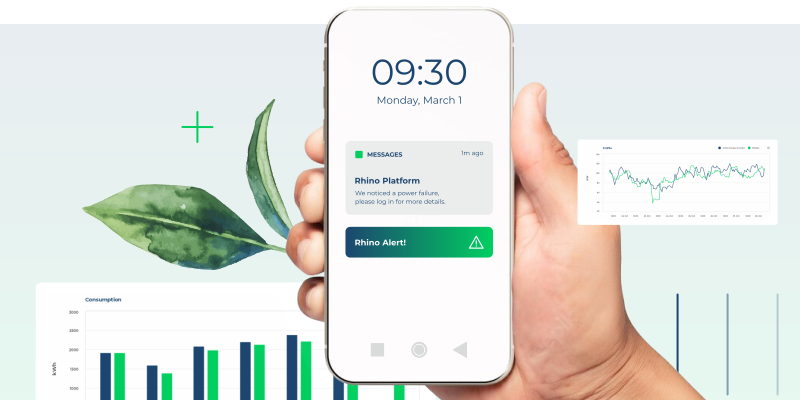
Seven sources of retail energy waste operate simultaneously in typical stores, draining $20,000+ annually until Monitoring as a Service provides the visibility to detect each one.
Modern monitoring systems make retail energy waste visible through real-time dashboards showing consumption by hour, by system, and by location. Alerts notify you within minutes when problems occur rather than weeks later when utility bills arrive. Subscription-based Monitoring as a Service requires zero capital and fits operating budgets starting at $750 per month for energy-focused solutions. Deployment takes 10 days from contract to operational monitoring. Within 30 days, systems typically identify $12,000+ in annual retail energy waste previously hidden by lack of visibility. The retail chain energy monitoring approach scales across all locations from a single platform, giving multi-store operators portfolio-wide visibility. Comparing your stores against each other through the BMS vs IoT analysis shows why subscription monitoring delivers better results than traditional building management systems at a fraction of the cost.
The Compounding Effect: How Seven Waste Sources Drain $20K+ Annually
Individual waste sources seem manageable when viewed separately. But when after-hours operation ($400/month), HVAC over-conditioning ($300/month), lighting waste ($200/month), refrigeration inefficiency ($800/month for food retailers), phantom loads ($100/month), and equipment degradation ($500/month) all compound simultaneously without detection, total annual energy losses reach $20,000-$30,000+ per location.
Typical Annual Energy Losses by Source
- After-hours operation: $4,000-$8,000
- HVAC over-conditioning: $3,000-$6,000
- Lighting waste: $2,000-$4,000
- Refrigeration inefficiency: $5,000-$12,000 (food retailers)
- Phantom loads: $1,000-$2,000
- Equipment degradation: $3,000-$8,000
- Lack of visibility: Extends all detection times by 3-6 months
Total typical energy losses: $18,000-$40,000 annually per location
For multi-location retailers, waste compounds across the entire portfolio. A 10-location chain wasting $25,000 annually per store hemorrhages $250,000 yearly. Over five years, cumulative energy losses approach $1.25 million. Many retailers facing building performance standards in cities like New York, Boston, and Denver now face regulatory penalties on top of these operational losses, making waste elimination both a financial and compliance priority.
Your 30-Day Action Plan to Eliminate Retail Energy Waste
Most retailers achieve the best results following a systematic approach that prioritizes quick wins while building toward comprehensive solutions. This proven action plan shows exactly what to do each week.
Week 1 – Identify and Quantify: Calculate your baseline energy consumption per square foot by dividing annual energy costs by total square footage. Retail average is $1.50-$3.00 per square foot annually. If you exceed $2.50, significant energy losses exist. Conduct after-hours walkthroughs documenting every light, system, and piece of equipment operating when the store is empty. This baseline assessment typically requires 2-3 hours per location but identifies thousands in immediate opportunities. The energy benchmarking process gives you a clear picture of where you stand against comparable stores.
Week 2 – Implement Free Fixes: Adjust HVAC schedules implementing setback temperatures during closed hours. Reprogram thermostats to reduce conditioning during predictably slow periods. Create staff training on energy awareness including turning off lights in unoccupied spaces and reporting equipment problems immediately. Install simple occupancy sensors in back-of-house spaces for $30-50 per room. These zero-cost and low-cost changes typically cut energy losses by 10-15% immediately, showing results on your very next utility bill.
Week 3 – Get Professional Assessments: Request free energy assessments from 2-3 monitoring providers. Ensure each provider offers performance guarantees and can demonstrate results at similar retail and restaurant operations. Check ENERGY STAR scoring for your buildings and review case studies from comparable retailers. Understanding where your stores rank against industry benchmarks provides the business case for investment decisions.
Week 4 – Deploy Monitoring or Priority Solutions: Deploy professional monitoring if your analysis shows sufficient waste to justify investment with 1-2 month payback. Most subscription-based monitoring platforms deploy within 10 days and begin identifying energy losses within 30 days. The same monitoring approach works for warehouse operations, healthcare facilities, manufacturing plants, and school districts facing similar hidden waste challenges.
How Much Is Your Building Wasting on Energy?
According to the EPA, most commercial buildings waste 25% on energy. The ones that monitor it don’t. See what you could save in 30 seconds.

Frequently Asked Questions About Retail Energy Waste
How much retail energy waste is typical for stores without monitoring?
Typical mid-size retail stores waste 25-35% of total energy consumption, translating to $15,000-$30,000+ annually per location. This retail energy waste occurs across seven distinct sources: after-hours operation ($4,000-$8,000), HVAC over-conditioning ($3,000-$6,000), lighting waste ($2,000-$4,000), refrigeration inefficiency ($5,000-$12,000 for food retailers), phantom loads ($1,000-$2,000), equipment degradation ($3,000-$8,000), and lack of visibility that extends detection times for all problems. The percentage varies by retail type – grocery stores typically waste 30-40% due to refrigeration loads, while specialty retailers waste 20-30% primarily through HVAC and lighting. Stores spending above $2.50 per square foot annually on energy almost certainly have significant waste worth investigating.
What is the fastest way to identify retail energy waste without expensive audits?
Start with after-hours walkthrough audits you can conduct yourself – visit one hour after closing and again at midnight. Document every light, piece of equipment, and system operating when the store is empty. This free assessment typically identifies $4,000-$8,000 in annual after-hours retail energy waste within 30 minutes. Compare overnight baseline consumption to daytime peaks using 12 months of utility bills. If overnight consumption exceeds 40% of daytime average, massive after-hours waste exists. Calculate your energy cost per square foot annually and compare against the $1.50-$3.00 retail average. These free diagnostic steps identify most waste sources within 2-3 hours per location, giving you the data to prioritize before investing in professional store energy monitoring systems.
Can I eliminate retail energy waste without major capital investment?
Yes. Operational improvements and low-cost fixes typically eliminate 40-50% of retail energy waste with minimal investment. Adjusting HVAC schedules costs nothing but saves $2,000-$4,000 annually. Training staff to power down equipment and turn off lights saves $1,500-$3,000 annually with zero investment beyond training time. Installing occupancy sensors in back-of-house spaces costs $30-50 per room with immediate payback. For comprehensive waste elimination, subscription-based Monitoring as a Service requires zero capital with monthly costs starting at $750. These systems deploy in 10 days and typically achieve positive cash flow within 60 days as identified savings exceed subscription costs. This OpEx vs CapEx monitoring approach makes professional-grade monitoring accessible regardless of available capital budget.
How quickly can I see results after addressing retail energy waste?
Operational improvements deliver immediate results visible on your next utility bill 30 days after implementation. Adjusting HVAC schedules, powering down equipment overnight, and fixing obvious waste sources typically produce 5-10% reduction visible within the first billing cycle. Professional monitoring systems identify retail energy waste within 30 days of deployment, with full savings realized within 60-90 days as all waste sources are systematically addressed. After-hours operation waste stops immediately once schedules are corrected. HVAC over-conditioning improves within days of setpoint adjustments. Equipment degradation requires maintenance or replacement but begins improving within weeks. The cumulative effect builds over 90 days as multiple retail energy waste sources are eliminated simultaneously, with typical results showing 20-30% total reduction within three months.
Will eliminating retail energy waste affect customer comfort or shopping experience?
Properly implemented waste elimination maintains or improves customer comfort. The key is distinguishing between necessary conditioning and wasteful over-conditioning. Running HVAC overnight when nobody is shopping wastes energy without providing any customer value. Conditioning stockrooms to the same standard as sales floors wastes energy without affecting customer experience. Smart retail energy waste elimination focuses on removing conditioning when customers are not present, reducing over-conditioning during shoulder seasons, and optimizing systems during occupied hours. Modern monitoring and control systems maintain customer comfort as the top priority while eliminating waste that provides zero value. In fact, eliminating waste often improves comfort by identifying hot and cold spots, inadequate ventilation, and equipment malfunctions that compromise the shopping environment. Good retail air quality monitoring actually enhances the in-store experience.
Which retail energy waste source should I address first?
Start with after-hours operation because it delivers the fastest results with zero investment beyond schedule adjustments. After-hours retail energy waste typically represents $4,000-$8,000 annually and stops immediately once equipment schedules are corrected to match actual business hours. This quick win builds momentum and demonstrates tangible results that justify additional investments. If you operate a food retail location with significant refrigeration, prioritize refrigeration waste second because it combines high ongoing costs with catastrophic failure prevention. Refrigeration inefficiency wastes $5,000-$12,000 annually while setting the stage for failures costing $15,000-$25,000 in repairs and spoilage. For non-food retailers, HVAC over-conditioning typically represents the second-largest retail energy waste source at $3,000-$6,000 annually and responds well to simple setpoint changes. Consider after-hours HVAC cost reduction as your first priority target.
How does monitoring prevent retail energy waste better than manual management?
Monitoring provides continuous visibility that manual approaches cannot match. Humans cannot watch energy consumption 24/7, detect gradual degradation patterns, or identify problems that occur intermittently. Monitoring systems track consumption every minute of every day, alerting managers within minutes when problems occur rather than weeks later when utility bills arrive. According to the EPA, automated energy management systems can reduce commercial building energy use by 10-30% through continuous optimization. Machine learning algorithms identify patterns invisible to manual inspection. A compressor gradually losing efficiency over six months escapes human detection, but monitoring systems identify the trend and alert before catastrophic failure. After-hours equipment operation that varies by day of week creates patterns too complex for manual scheduling to optimize. This is why energy monitoring delivers returns that manual approaches cannot replicate.
What happens if I do not address retail energy waste?
Retail energy waste compounds over time as utility rates increase and equipment efficiency degrades. A store wasting $2,000 monthly today will waste $2,200 monthly next year as rates climb. Equipment degradation adds another 2-4% annually, bringing total waste to $2,300-$2,400 monthly by year two. Over five years, cumulative energy losses from a single location exceeds $150,000 in cumulative losses, an amount that often exceeds the value of multiple years of monitoring subscriptions. Meanwhile, competitors who address retail energy waste gain margin advantages of 2-5% that compound into significant competitive advantages over time. With utility rates climbing 3-5% annually and building performance regulations expanding to more cities, inaction becomes more expensive every year. New regulations in cities like New York (Local Law 97), Boston (BERDO), and Denver (Energize Denver) impose escalating fines on buildings exceeding emissions thresholds, adding regulatory penalties to operational waste. The cost of addressing retail energy waste will never be lower than it is today, and indoor air quality monitoring requirements are expanding alongside energy regulations.
Stop Losing $15K-$30K Per Store to Invisible Retail Energy Waste
Your stores are bleeding money through seven invisible sources of retail energy waste right now. Our free facility assessment identifies exactly how much each source costs your operation and builds a prioritized elimination plan.
- + Quantify all seven waste sources with dollar figures per store
- + Identify quick wins that save thousands with zero capital investment
- + Get a prioritized 30-day action plan customized to your operation
- + See exactly what monitoring would reveal in your specific stores
- + Receive a guaranteed savings projection backed by real data
Our Guarantee
Spending over $10K/month without BMS? We guarantee a 10% reduction in energy consumption in 12 months, or we work for free until we deliver it.
From $750/month – Learn more
Email us at detect@envigilance.com | We reply within 24 hours